
Transfer duty is one of the biggest acquisition costs in a development feasibility, and it is one of the easiest lines to misread if you jump between states. Developers who treat duty as "about five per cent" usually either overbid, under-model or both.
The Fast Answer
Across Australia, the practical duty questions are:
- What does this state call the tax and what are the current thresholds?
- Is there a foreign buyer or foreign acquirer surcharge?
- What happens if the site is held long enough to trigger land tax pain?
- Does the buyer or end buyer get any useful first home or off-the-plan settings?
Get those wrong and the whole feasibility is wrong.
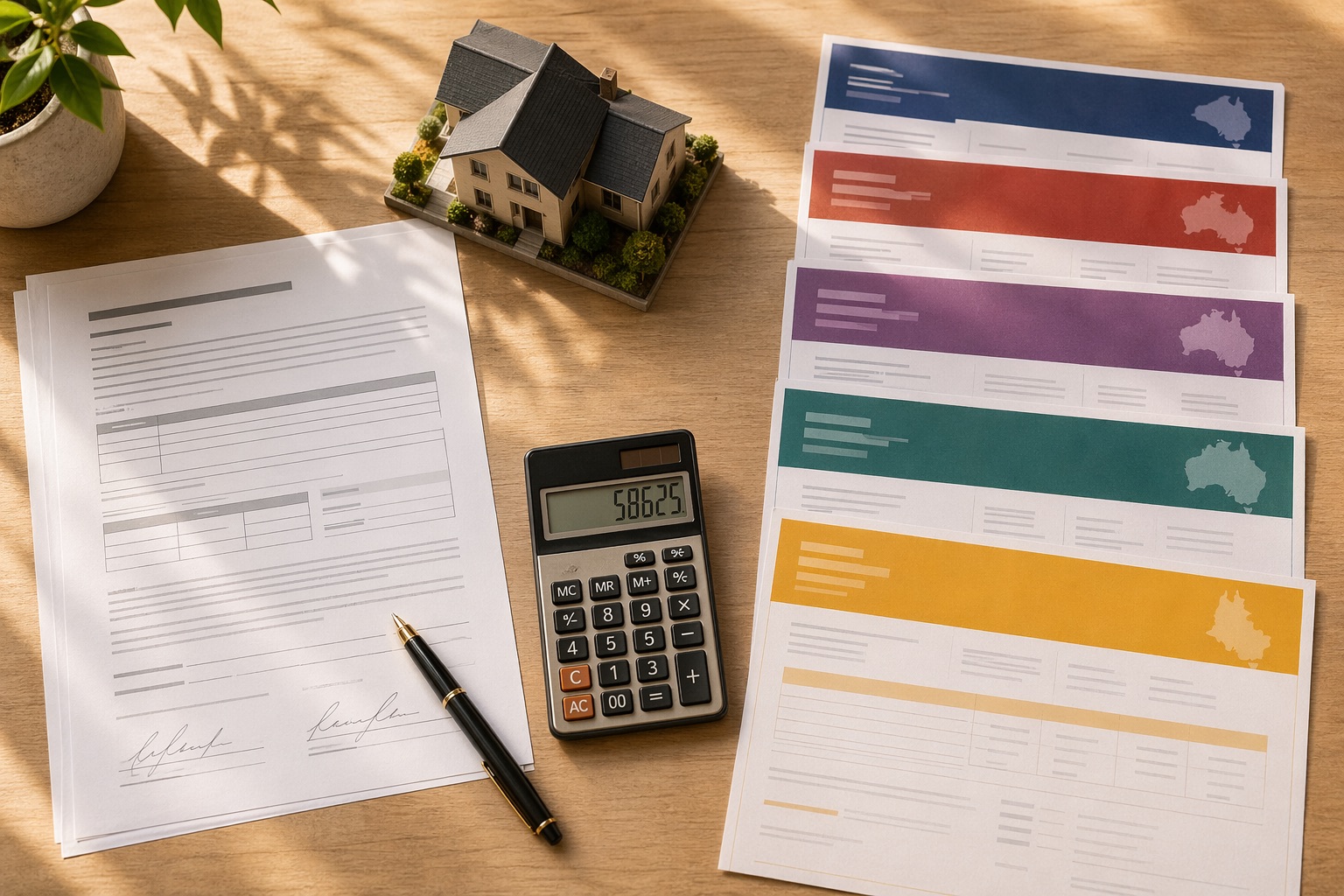
The stamp duty puzzle: five states, five different rate structures, five different surcharge and concession settings. Getting the right number means checking each state's current revenue authority page, not relying on an old spreadsheet.
Why State Comparisons Matter
| Factor | NSW | VIC | QLD | WA | SA |
|---|---|---|---|---|---|
| Top marginal duty rate | Premium above $3.4M | 5.5% above $960K | 5.75% above $1M | 5.15% above $725K | 5.5% above $500K |
| Foreign surcharge | 8% (Surcharge Purchaser Duty) | 8% (AFPD) | 7% (AFAD) | 7% (FTD) | 7% (FSS) |
| Off-the-plan concession | Yes, time-limited | Yes | Limited | Up to $50K rebate | Limited |
| First home buyer nil duty | Up to $800K | Up to $600K | Up to $700K | Up to $430K | Up to $650K |
| Land tax threshold (individual) | $1.075M | $50K (general) | $600K | $300K | $450K |
Developers compare sites across states all the time. The acquisition cost structure is not interchangeable.
- NSW can look harsher once you combine transfer duty, surcharge purchaser duty and the premium band above $3.4M. On a $5M site with foreign exposure, you can be looking at well over $400K in duty alone
- Queensland can look more workable with nil duty for first homes up to $700K, but AFAD at 7% and holding structure still matter on anything with foreign capital
- Victoria brings its own pain: the $50K land tax threshold means holding costs bite fast, and AFPD at 8% matches NSW as the highest foreign surcharge in the country
- WA can still be comparatively lighter on transfer duty, and the off-the-plan rebate (up to $50K) is one of the more generous nationally, but FTD at 7% and MRIT need to be modelled
- SA may look more affordable on site price, but the 5.5% top rate kicks in at just $500K, which is lower than every other mainland state
Duty Is Only Part of the Acquisition Story
Developers should never model duty in isolation.
The bigger acquisition-cost stack usually includes:
- transfer duty or land transfer duty
- foreign surcharge exposure
- land tax while holding
- GST and margin-scheme consequences
- legal and structuring implications around trusts or entities
Same site, different buyer structure, different number at the bottom of the page.
First Home Buyer Settings Can Change Exit Pricing
The developer never gets the concession directly. But first home buyer settings still shape how attractive completed product is to the end buyer.
Most relevant for:
- townhouses
- smaller apartments
- grouped dwellings
- house-and-land style product in growth corridors
Off-the-Plan Rules Are Not the Same in Every State
Off-the-plan rules are one of the biggest sources of confusion in duty discussions.
- In some states, the main practical benefit is timing or a concession tied to the construction component
- In others, the settings are temporary, expanded, or targeted to specific product types
Treat off-the-plan duty settings as state-specific and time-specific. They are not a generic national discount.
GST Still Sits Next to Duty
Transfer duty and GST are different taxes. Developers feel them together in feasibility.
If the acquisition and later sales qualify, the margin scheme can materially change the GST result. A duty-only view is never the whole tax picture.
Practical Advice Across States
- Use the current state revenue authority page, not an old spreadsheet.
- Check foreign surcharge exposure before exchange.
- Model land tax under the actual holding entity.
- Treat first home buyer settings as an exit-pricing issue, not just a buyer issue.
- Separate transfer duty from GST, but model both.
The Bottom Line
There is no single Australian stamp duty rule for developers. The useful comparison is not "which state is cheapest" in the abstract. It is which state's live duty, surcharge, land tax and buyer settings still allow your project to stack up after real acquisition costs are loaded.
For state-specific detail, use the linked guides for NSW, Queensland, SA, and WA. And if you are comparing sites across states, run them through a proper feasibility framework first.


