
Chambers Flat is a suburb in transition. It sits in Logan City Council's southern reaches, roughly 40 kilometres south of Brisbane. Horse properties. Large acreage lots. A semi-rural lifestyle. With 67 development applications tracked, that character is changing fast.
The DA numbers tell a straightforward story: land that was once measured in acres is being carved into residential lots. Chambers Flat is one of the frontlines of South East Queensland's suburban expansion.
| Metric | Value |
|---|---|
| Total DAs | 67 |
| Top category | Subdivision and reconfiguration of lots |
| Typical lot size | 400 to 600 sqm (new residential lots) |
| Council | Logan City Council |
| Original parcel size | 5 to 40 hectares |
| Key advantage | Active frontline of SEQ suburban expansion with all development stages happening simultaneously |
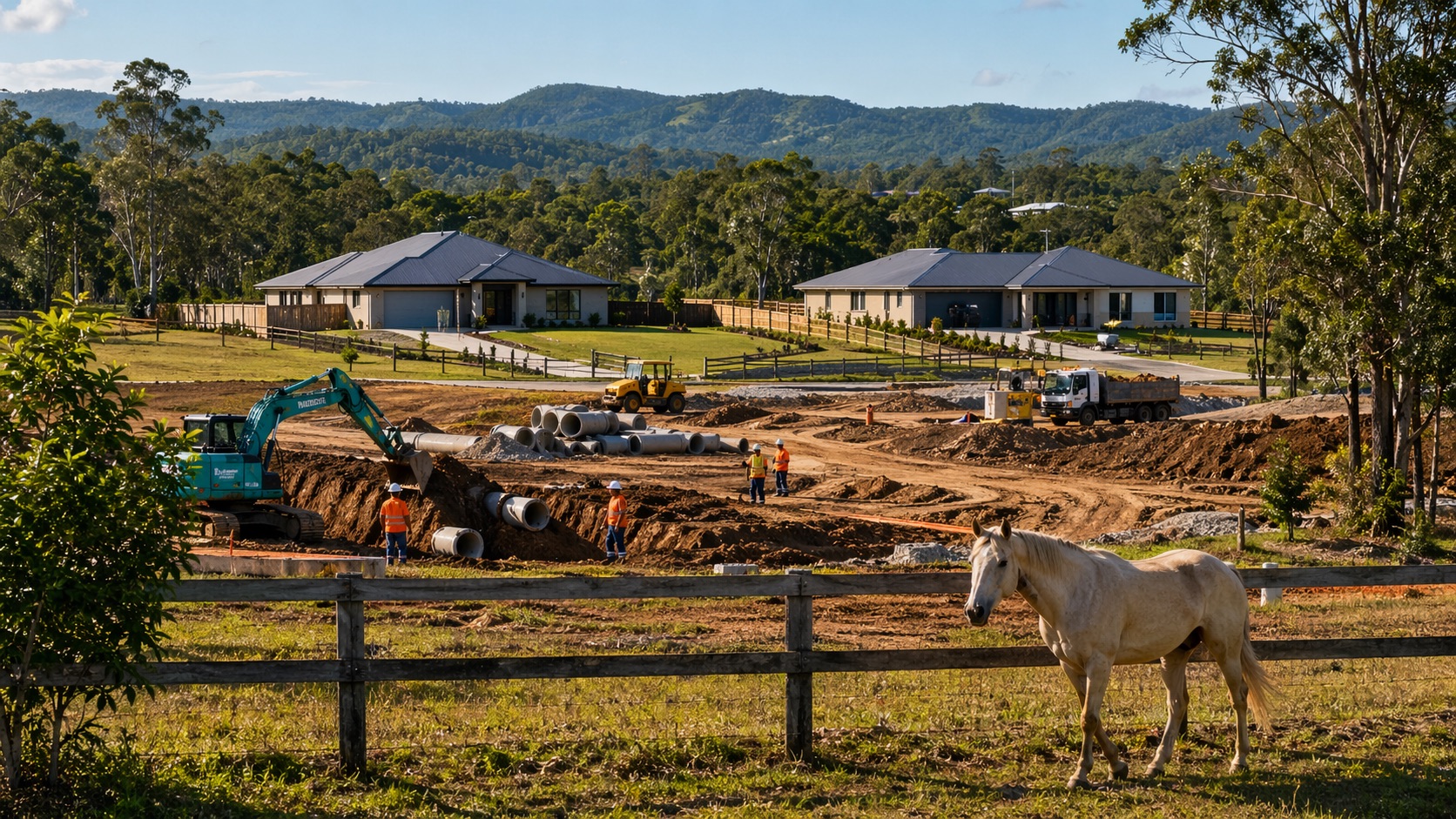
Chambers Flat in transition: horse paddocks meet drainage pipe crews. The subdivision lifecycle is happening in real time across different parts of the suburb.
The DA Picture
Chambers Flat's 67 DAs put it among the more active suburbs in the Logan City Council area. For context, that's in the same ballpark as established suburbs with far larger populations. The DA volume relative to the suburb's current size signals rapid transformation.
Subdivision and reconfiguration of lots dominate the pipeline. Large acreage parcels are being subdivided into standard residential lots, typically in the 400 to 600 square metre range. This is the first step in the development chain, and everything else follows.
New dwelling construction is the next major category. As subdivided lots are registered and sold, builders move in. The homes going up are predominantly detached houses on individual lots, the standard product for greenfield development in SEQ.
Civil and infrastructure works support the subdivision activity. New roads, stormwater systems, sewer connections, and water mains all require DAs or associated approvals. Every new estate requires significant civil engineering before a single house slab is poured.
Operational works applications cover the earthworks, vegetation clearing, and site preparation that precede subdivision construction. In a suburb transitioning from rural to residential, these applications involve significant land transformation.
Why Chambers Flat Is Being Developed Now
Land supply pressure. SEQ's population growth has pushed development further from Brisbane. The closer suburbs are built out. Chambers Flat represents the next wave, sitting between established areas like Marsden and the newer growth fronts around Yarrabilba.
Road connectivity. Proximity to the Mt Lindesay Highway connects southward to the NSW border and northward to Brisbane via the Logan Motorway interchange. For a growth suburb, transport access is the single most important infrastructure factor.
Zoning changes. Logan City Council has progressively rezoned parts of Chambers Flat from rural to emerging community and residential zones, unlocking the legal pathway for subdivision. For a step-by-step look at how the QLD DA approval process works, see our separate guide.
Developer land banking. Major developers have been accumulating land here over the past decade, waiting for infrastructure and zoning to align. The patience is now paying off as estates move from planning to construction.
Price point. House-and-land packages in Chambers Flat come in significantly below comparable products in Brisbane's northern or western growth areas. For first home buyers? Price is the primary drawcard.
How Acreage Becomes Suburbia
The subdivision lifecycle explains the work opportunities in Chambers Flat. A developer purchases a large acreage lot (often 5 to 40 hectares), lodges a subdivision DA with masterplan, then progresses through operational works (earthworks, vegetation clearing), civil construction (roads, drainage, sewer, water, electrical), lot registration and sale, and finally house construction.
In Chambers Flat right now, all stages are happening simultaneously across different estates and parcels. Some sites are still being cleared while others already have houses going up. The overlap is what creates the sustained volume of 67 DAs.
The area has some flood-prone land near tributaries of the Albert River, which adds engineering complexity to the civil works phase and can reduce developable area on certain parcels.
Tradies: Where to Focus
The trade opportunities in Chambers Flat are heavily weighted toward new construction.
Civil contractors and earthworks operators have the highest immediate demand. Every new estate begins with bulk earthworks, and the scale of land transformation in Chambers Flat is substantial: rural acreage flattened, graded, drained, and turned into streets and lots over a span of months, with multiple estates at different stages of that process running at the same time.
Concreters are needed across both the civil and residential phases. Kerb and channel, footpaths, driveways, and house slabs represent continuous concrete work as each estate progresses through its stages.
Plumbers and drainers work across all phases, from civil-phase sewer and stormwater installation to residential rough-in and fit-off.
Fencers and landscapers come in during the final stages. Boundary fencing is required before handover, and each property needs turf, garden beds, and sometimes retaining walls. In a high-volume estate, you can do multiple jobs on the same street in a single day.
The key advantage for tradies working in Chambers Flat is pipeline visibility. Subdivision approvals are visible months before residential construction starts, giving you time to quote, plan crew availability, and lock in builder relationships.
Developer Perspective
Chambers Flat is a developer's market right now. Low land costs. Supportive zoning. Strong buyer demand at the affordable end.
The main risks are infrastructure timing and flood management. Some parcels have waterway constraints that reduce developable area. Our feasibility calculator supports Queensland zones and can help model lot yield, dwelling capacity, and development costs.
The Bigger Picture
Chambers Flat's 67 DAs sit within Logan City Council's remarkable total of 1,699, the highest of any council in Australia. Our Logan City DA boom analysis breaks down why the corridor is leading the nation. The Logan growth corridor, from Beenleigh in the north through to Yarrabilba in the south, represents the single largest concentration of development activity in the country.
Chambers Flat is where that corridor is actively expanding, where the acreage is becoming suburbia one DA at a time, and where anyone in the construction industry should be paying attention to what gets lodged next.
Browse all Logan City Council DAs to see the full pipeline, or explore QLD insights for statewide development trends.


