
Logan Reserve is a suburb in transition. Located about 30 km south of Brisbane in the Logan City Council area, it has 103 development applications in our database. Level with neighbouring Bahrs Scrub. Firmly in Australia's top 10 suburbs for DA activity.
What makes Logan Reserve interesting is the mix. Unlike some growth suburbs where subdivision dominates almost exclusively, Logan Reserve shows a balanced split between land division and new dwelling construction. That tells us the development cycle here is more mature: lots are being created and built on simultaneously.
| Metric | Value |
|---|---|
| Total DAs | 103 |
| Top category | Subdivision and new dwelling construction (balanced split) |
| Typical lot size | 400 to 600 sqm |
| Council | Logan City Council |
| Price advantage | 10 to 15% cheaper than more established Logan suburbs |
| Key advantage | Mature development cycle with lots being created and built on simultaneously, in Australia's top 10 for DA volume |
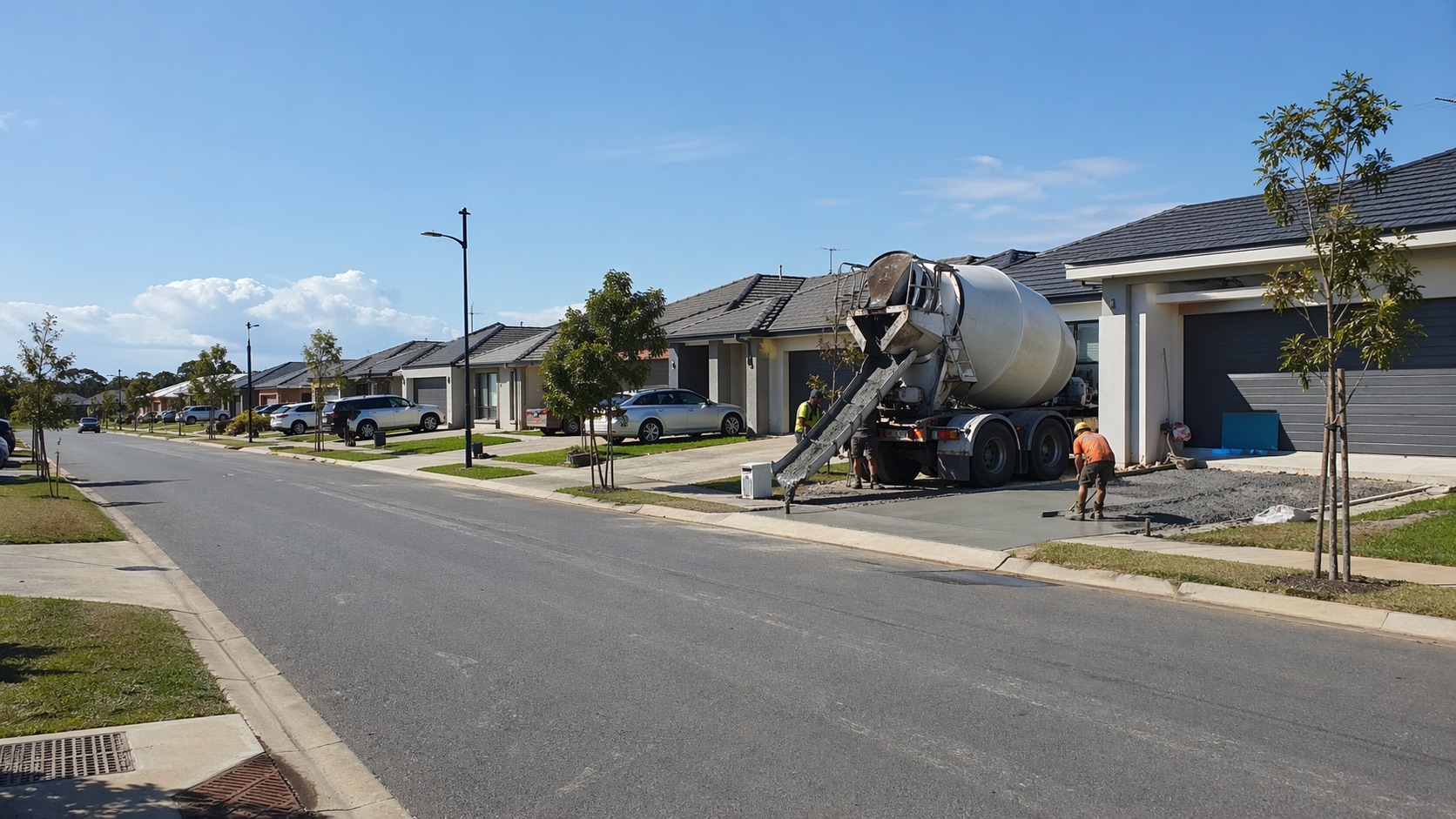
Logan Reserve: new houses, fresh turf, and a concrete truck pouring a driveway. 103 DAs with a balanced split between subdivision and new dwelling construction.
The Development Mix
Logan Reserve's 103 DAs break down into two main categories.
Subdivision remains the largest single DA type. Large lots along Chambers Flat Road and the surrounding rural fringe are being divided into standard residential lots. Some of these are straightforward 2-into-4 lot splits. Others are larger land releases creating 20 to 50 lots at a time.
New dwelling construction is close behind. Registered lots from subdivisions approved 12 to 18 months ago are now moving to the building phase. This creates a steady flow of house construction DAs that will continue as more lots reach title.
Why Logan Reserve Is Booming
Logan Reserve benefits from the same regional dynamics driving the entire Logan corridor, plus a few suburb-specific factors.
Proximity to Park Ridge. The Park Ridge town centre development has brought retail, medical, and education services to the area. Five years ago, these amenities did not exist. Now they do, and that single change removed the biggest barrier to residential growth in Logan Reserve, because families will tolerate a commute but they will not tolerate driving 20 minutes to buy groceries or see a doctor.
Road connectivity. Chambers Flat Road runs straight north to the Logan Motorway and M1. Council upgrades to local roads are keeping pace with development, though peak-hour congestion is a growing concern that savvy buyers check before signing a contract, because a 30-minute drive at 10am can become an hour at 7am when every new estate adds another hundred cars to the same road at the same time.
Competitive land pricing. Vacant lots in Logan Reserve are typically 10 to 15% cheaper than equivalent lots in more established parts of Logan. For house-and-land buyers working to a budget, 10 to 15% is the difference between affording a home and not.
Rezoning momentum. Rural residential lots along the suburb's western edge have been progressively rezoned for urban residential use under the Logan Planning Scheme. Each rezoning triggers a new wave of subdivision applications. For an overview of how the QLD DA approval process works, see our separate guide.
What Is Being Built
The typical new home in Logan Reserve is a single-storey, 4-bedroom, 2-bathroom house on a lot between 400 and 600 square metres. Two-storey homes are less common but increasing as lot sizes shrink and builders push floor area upward.
House-and-land packages dominate the market. Volume builders are active across multiple estates, which means construction timelines are relatively predictable. Slab. Frame. Lock-up. Completion in 6 to 9 months.
Opportunities for Tradies
The dual nature of Logan Reserve's DA pipeline creates opportunities at two stages.
For civil trades, the ongoing subdivision work means demand for earthmoving, drainage, kerb-and-channel, and road construction. Big contracts. Often won by established civil firms, but the subcontracting layer beneath them is where smaller operators pick up steady work.
For residential trades, the volume of new dwelling DAs means consistent work for concreters, framers, roofers, plumbers, electricians, and plasterers. With multiple builders operating in the area simultaneously, there is enough work to support both builder-aligned subcontractors and independents picking up individual jobs.
For finishing trades, the establishing community creates demand for fencing, landscaping, driveways, and outdoor living areas. Lagging wave. Three to six months after house completion, the calls start coming in.
Browse Queensland's live DA data to find leads in Logan Reserve and surrounding suburbs.
Opportunities for Developers
Small-scale subdivision is the clearest opportunity. Purchase a 2,000+ sqm lot, divide it into 4 to 6 residential lots, and sell into a market with strong buyer demand at the affordable end of the spectrum where first home buyers and young families are actively looking for land packages. Three variables determine whether the numbers work: acquisition cost, council infrastructure charges, and civil works costs.
Larger subdivision projects of 20+ lots require navigating council conditions around road upgrades, open space contributions, and stormwater management. These conditions can add 6 to 12 months to the timeline, so accurate feasibility modelling matters.
Use our feasibility calculator to model development scenarios on any Logan Reserve property. The tool pulls zone data, lot dimensions, and market comparables automatically.
Part of a Bigger Story
Logan Reserve is one of five Logan suburbs in Australia's top 10 for DA volume. Together with Cornubia, Greenbank, Yarrabilba, and Bahrs Scrub, it forms a growth corridor that is producing more development applications than any other region in the country. Our Logan City DA boom analysis digs into the numbers behind this trend.
For tradies and developers, understanding the pipeline in each of these suburbs, and how they connect, is the difference between chasing work and planning ahead. Stop chasing. Start planning. Explore the full QLD insights dashboard to see the bigger picture.


