
Most roofing work does not become a planning problem. It becomes a planning problem when the work is visible, structural, or heritage-sensitive.
That is the distinction to get right before you quote.
The Fast Answer
| Type of work | Planning risk | Building risk |
|---|---|---|
| Like-for-like maintenance | Usually low | Often low |
| Structural or material change | Can stay low on planning | Building approval risk rises |
| Visible roofline or heritage change | Planning risk rises | Building issues may rise too |
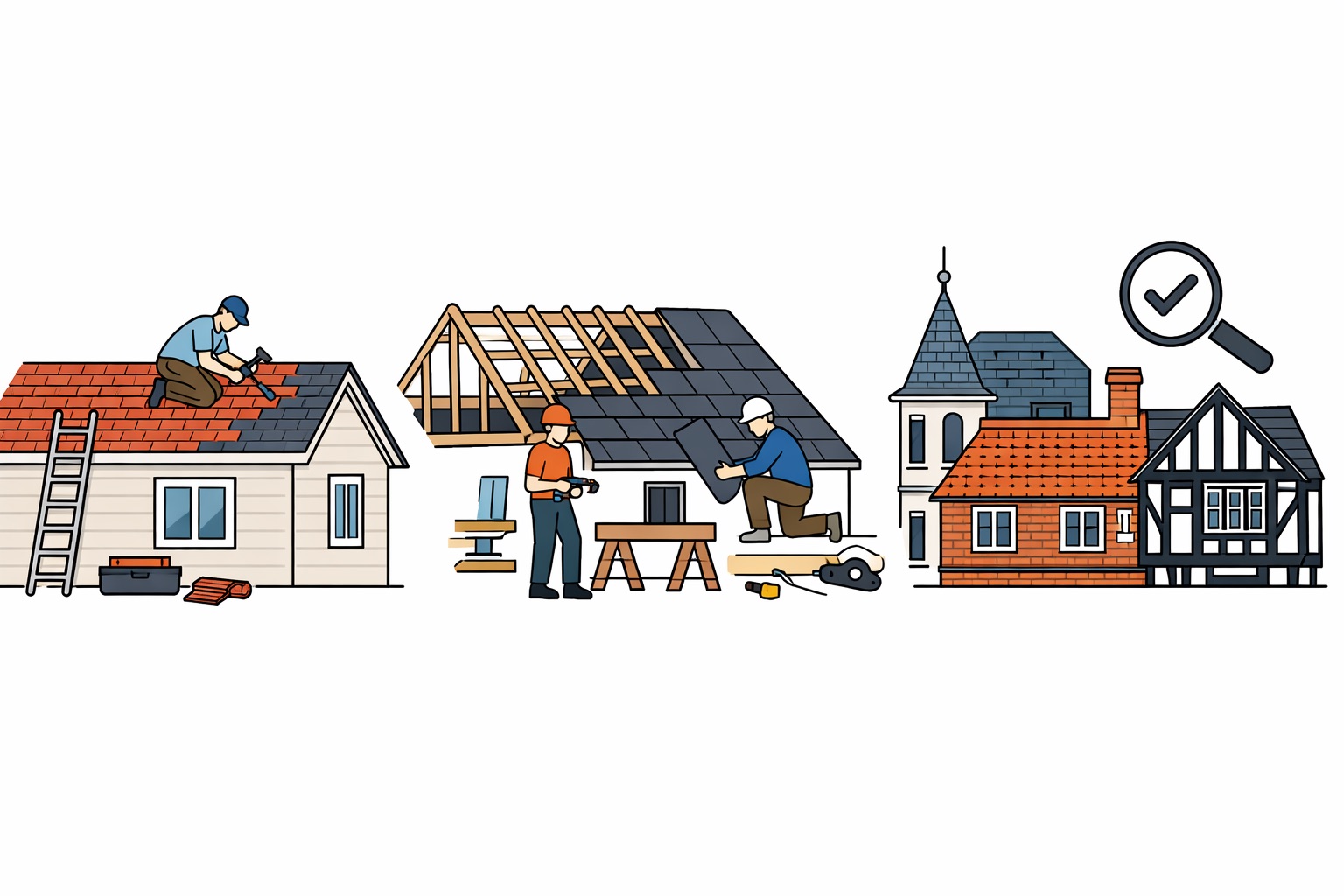
Roofing permit decision path: the approval burden rises when work changes structure, height, drainage, or heritage conditions. Source: DA Leads synthesis of Australian permit guidance.
Maintenance Is Usually the Simple Category
Roof repairs and like-for-like replacement are usually treated very differently from bigger modifications.
Typical low-friction work includes:
- Replacing damaged sections with similar material
- Routine repairs to flashings and drainage components
- Maintenance that does not change the roof's structure or visible form in a material way
That is why most roofing jobs never show up in planning data.
Structural Change Is the Building Trigger
Once the work changes structural performance, the roof stops being just a maintenance question.
Common examples are:
- Material substitution that changes load assumptions
- Roof profile or height changes
- New penetrations or framed openings
- Work that affects weatherproofing, structure or fire performance in a bigger way
This is where a building surveyor or equivalent approval path becomes more important.
Heritage and Visible Change Are the Planning Trigger
Planning permits for roofing work are uncommon, but when they do show up, the most common reasons are:
- Heritage controls
- Design or neighbourhood-character controls
- Visible roofline changes
If the roof is part of what the planning system is trying to protect, the job moves out of the simple maintenance lane.
That is why heritage-area reroofing is usually better lead quality than generic repair work. The owner already knows they are dealing with a more sensitive approval problem.
Why Material Changes Matter
Changing roofing material is not just a product decision. It can become:
- A structural question
- A visual-planning question
- A compliance question if the building is regulated more tightly
This is why roofing contractors should not treat "same roof shape, different product" as automatically simple.
What This Means for Roofing Contractors
Before you quote, ask:
- Is this still maintenance, or is it a material or structural change?
- Is the building in a heritage or character-controlled area?
- Will the roofline or visible appearance change?
- Do we need building approval even if planning approval is not triggered?
Those four checks will usually tell you whether the job is routine or approval-heavy.
The Bottom Line
The majority of roofing work sits outside the planning-permit world. The valuable leads are the exceptions: visible, structural, or heritage-sensitive jobs where the approval path is harder and the client needs more certainty.
Browse roofing leads on DA Leads to find the higher-friction projects that are more likely to need experienced contractors.


