
In Victoria, a planning permit and a building permit are not the same thing. If a planning permit is required, it usually comes first, the regular statutory review point is 60 days, public notice must stay open for at least 14 days when notice is required, and eligible VicSmart applications can be reviewed after 10 business days. For tradies, that means the best outreach window usually starts after lodgement and runs right through assessment.
Every tradie has had the conversation. The homeowner says they're ready to go, then disappears for months because "council is taking forever." Understanding how planning permits actually work, in practice, helps you manage expectations, time your outreach, and avoid wasting effort on projects that are stuck in limbo.
Planning Permit vs Building Permit: The Fast Comparison
This trips up a lot of people, including some homeowners.
| Question | Planning permit | Building permit |
|---|---|---|
| What it checks | Land use, zoning, overlays, neighbourhood impact | NCC compliance, structural safety, siting and construction detail |
| Who decides | Council or other responsible authority | Registered building surveyor |
| When it applies | Before use or development that needs planning approval | Before building work starts, unless exempt |
| Order | Usually first, if required | Must align with any planning permit already issued |
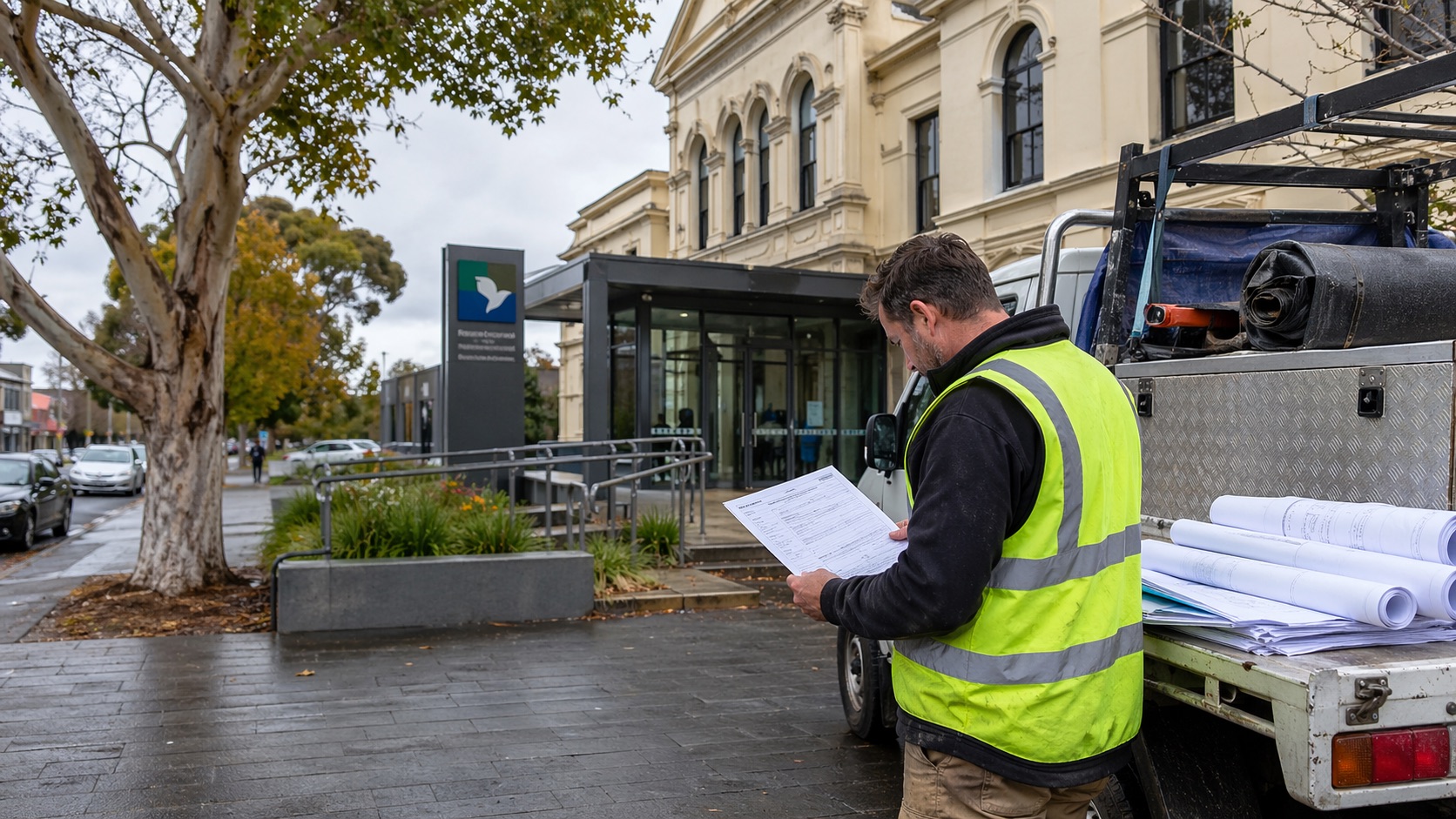
The planning permit is step one. The building permit comes after. Both are mandatory for most development projects in Victoria, and knowing where each one sits in the timeline matters for how you approach council.
A planning permit is about "can you do this here?" It's assessed by council planners who check the proposal against the local planning scheme (zoning, overlays, setbacks, neighbourhood character). This is the one that takes ages.
A building permit is about "will this be safe and compliant?" It's assessed by a registered building surveyor (either council or private) against the National Construction Code. This is usually faster.
Most significant projects need both. The planning permit comes first. You can't get a building permit for something that doesn't have planning approval (if planning approval is required).
The Planning Permit Timeline: What You Can Actually Rely On
The official line: Council has 60 statutory days to decide on a planning permit application.
The reality: That is not 60 calendar days. The statutory clock can pause while council waits for further information, public notice has to stay open for a minimum period, and referral authorities can have their own response window.
Why the gap? The statutory clock doesn't run continuously. It pauses when council requests further information, when amendments are made, and during various administrative steps. The calculation follows Regulation 32 of the Planning and Environment Regulations 2015, so the number homeowners focus on is rarely the same as the time they feel on the ground.
For simpler projects, Victoria has a VicSmart process. Eligible applications can be reviewed after 10 business days, and many VicSmart matters avoid full public notice.
If council blows past the 60 statutory days without a decision, the applicant can appeal to VCAT (Victorian Civil and Administrative Tribunal) for a review. This adds even more time but it's an important safety valve.
What usually slows the clock
- Further information requests: the council can stop the clock while it waits for revised plans, reports, or clarifications.
- Public notice: if notice is required, submissions must stay open for at least 14 days after the last notice is given.
- Referrals: some applications must go to referral authorities, and they can take up to 28 days to respond.
- Amended plans: once plans change, planners often need to re-check setbacks, overlooking, traffic, or neighbour impact.
The Stages and What They Mean for You
1. Pre-Application (Sometimes)
Some homeowners meet with council planners before lodging to discuss their proposal. If a homeowner mentions they've had a pre-app meeting, that's a serious signal. They're doing their homework and moving forward.
2. Lodgement
This is when the application hits the council system and becomes public record, which means it appears on DA Leads when the homeowner submits their plans, reports, and the prescribed application fee. Money spent. Commitment made.
Your opportunity: The homeowner has committed financially but may not have a builder yet. This is a great time to reach out.
3. Public Notification (At Least 14 Days, When Required)
Council sends letters to neighbours and may require a sign on the site. Neighbours can submit objections during this period.
Your opportunity: The homeowner is waiting and may be anxious about objections. They might welcome a conversation with a knowledgeable tradie who can reassure them about the process.
4. Assessment
This is the long wait. Council planners review the proposal against the planning scheme. They'll consider zoning, overlays, neighbour impact, traffic, heritage, and any objections received.
Your opportunity: This is when most homeowners actively gather quotes. They're stuck waiting for council and want to feel like they're making progress. "While you're waiting for approval, I can give you a detailed quote so you're ready to go" is a compelling approach.
5. Decision
Council either grants the permit (often with conditions that specify materials, landscaping requirements, and construction hours), refuses it outright, or asks for more information, which resets the statutory clock and can add months to an already frustrating wait.
Your opportunity: A granted permit with conditions is a signal to follow up. The conditions might specify materials, finishes, landscaping requirements, or other details that affect the scope of work.
6. Building Permit
After planning approval, the homeowner needs a separate building permit. This is typically faster (weeks, not months) and is often when the homeowner locks in their builder.
| Stage | Outreach value | Why it matters |
|---|---|---|
| Lodgement | High | The owner has paid to apply, but often has not locked in all trades. |
| Public notice | Medium | Objections and uncertainty make reassurance valuable. |
| Assessment | Highest | This is the long wait, and many owners start collecting quotes here. |
| Decision | Medium | Conditions clarify scope, but budget pressure can rise. |
| Building permit | Lower | The shortlist is often tighter by this point. |
Permit Conditions That Create Extra Work
Council conditions are worth paying attention to because they often create additional work:
- Landscaping conditions: "A landscape plan must be prepared and implemented." That's work for a landscaper.
- Materials conditions: "External finishes must match the existing dwelling." The homeowner needs a builder who can match heritage details.
- Tree conditions: "An arborist report must be provided and tree protection zones maintained." That's work for an arborist.
- Hours of construction: "Construction must not occur outside 7am-6pm Monday to Friday." This affects your scheduling.
If you're new to DA terminology, our guide to what a development application actually is is the best companion read before you talk to a homeowner.
The Bottom Line
The planning permit process is slow, bureaucratic, and frustrating for homeowners. But for tradies, that slow process is actually an advantage. It gives you a long window (from lodgement to decision to construction) to build a relationship with the homeowner, provide value, and position yourself as the obvious choice.
Browse the latest DAs on DA Leads to find homeowners who are in the process right now, and use the feasibility calculator when a permit-ready site is far enough along to test yield, constraints, and margin.


