
For a standard rooftop solar installation on a normal house, planning approval is often not the problem. The trouble usually starts when the project stops being standard.
If you want the fast answer, ask four things first: is the building in a heritage setting, is the system still a typical rooftop install, is it ground-mounted or large-scale, and are there strata or battery issues sitting beside the planning question?
The Fast Answer
| Scenario | Planning risk | What still matters |
|---|---|---|
| Standard rooftop solar | Often low | Building, electrical and installer compliance still apply |
| Heritage or visible streetscape impact | Higher | Planning controls often become the main issue |
| Ground-mounted or larger-scale system | Higher | Land use, visibility and structural issues matter |
| Strata or battery-related setup | Mixed | Other approvals may matter even if a DA does not |
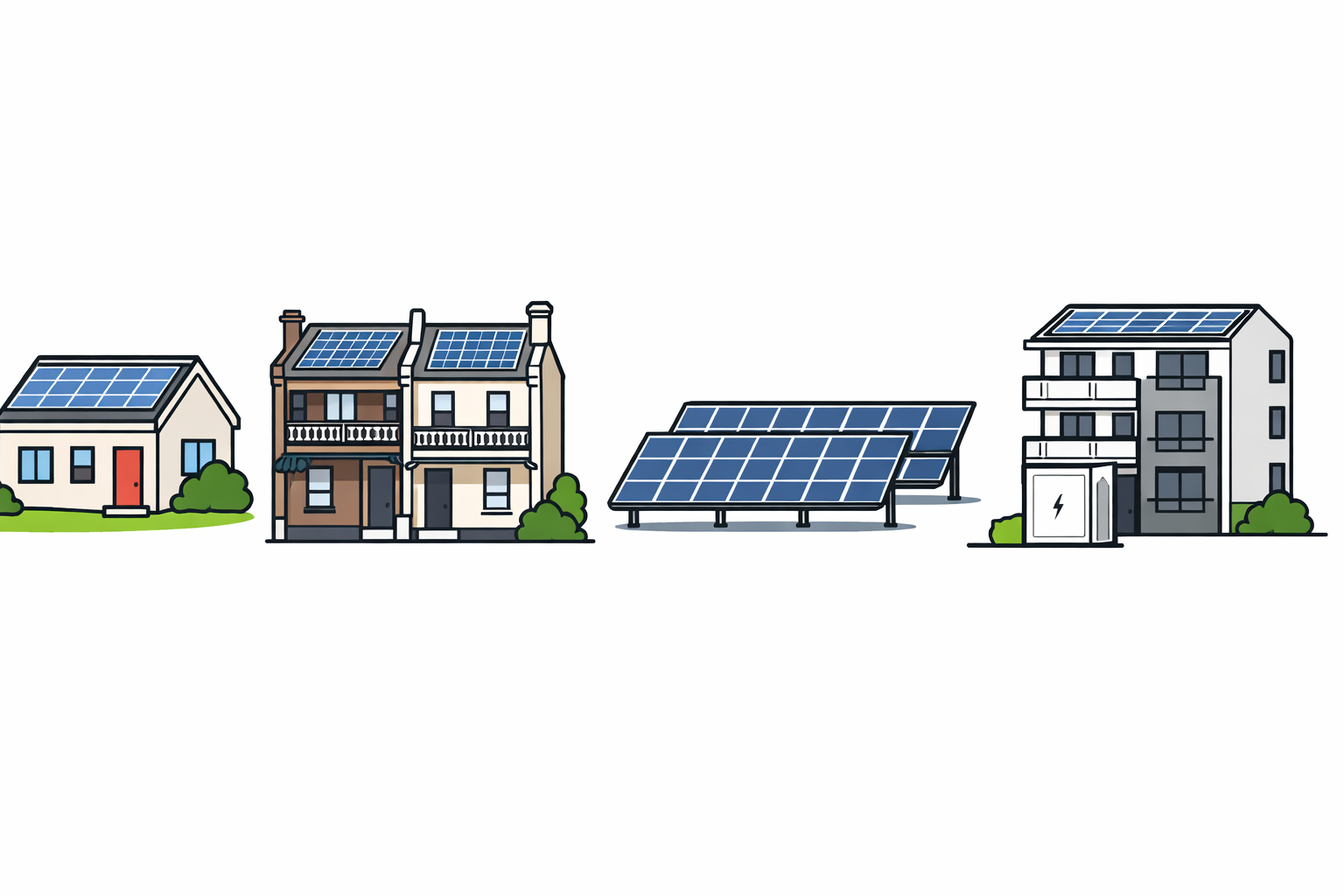
Solar approval triggers in Australia: structure, visibility, heritage, and local controls matter more than panel installation alone. Source: DA Leads synthesis of Australian solar approval guidance.
When Solar Is Usually Straightforward
Most small rooftop systems stay relatively simple because they are treated as low-impact work when they fit within the usual exempt or accepted settings.
That does not mean "no rules". It means the project is more likely to stay in the building, electrical and product-compliance lane rather than a planning-permit lane.
The Main Trigger: Heritage and Streetscape Controls
This is the most common planning trigger.
If the building is heritage-listed, inside a heritage precinct, or otherwise subject to a visible external-control framework, solar panels can become a planning issue very quickly, especially when they sit on prominent roof planes facing the street.
That is why solar jobs in heritage-heavy suburbs are often better leads. They are harder, slower and more consultant-heavy than a standard suburban install.
When the System Stops Being "Standard"
Projects tend to move out of the simple pathway when they involve:
- Ground-mounted arrays
- Large or visually prominent commercial systems
- Non-standard mounting arrangements
- Structural changes beyond a typical rooftop install
Once the system starts changing land use, site layout or visual impact in a bigger way, the planning question gets more serious.
Batteries and Strata Are Different Problems
Not every approval issue is a council permit issue.
Two examples:
- Battery storage can raise siting, fire-safety or building concerns even where planning approval is not the main problem
- Strata properties often bring owner-corporation or body-corporate approval into the picture before the job can move
That is why solar installers should not frame every job as "permit or no permit". Sometimes the real blocker sits elsewhere.
Why This Matters for Lead Quality
The small number of solar jobs that show up in DA-style systems are usually not the easy, low-margin installs. They are the harder ones:
- Heritage-sensitive work
- Commercial or industrial installs
- Ground-mounted systems
- Jobs with extra approval friction
Those are often better leads because the owner already knows the project is more complex and is more likely to value a contractor who understands the rules.
The Bottom Line
For ordinary rooftop solar, the planning answer is often simple. For heritage, non-standard, ground-mounted or approval-heavy projects, it is not. Those harder jobs are exactly where DA tracking becomes useful.
Browse solar energy leads on DA Leads to find the projects where planning friction is already filtering out casual buyers.


