
Subdivision looks simple from a distance: split one title into two or more, then capture the value uplift. In practice, the profit usually lives or dies in the process before registration.
The biggest mistake first-time subdividers make is thinking subdivision is one permit. It is not. It is a stack of planning, surveying, compliance and registration steps.
The Process at a Glance
| Stage | What matters most |
|---|---|
| Due diligence | Zone, overlays, minimum lot size, easements, access |
| Surveyor | Plan of subdivision, boundary and title reality |
| Permit and conditions | Council approval path, engineering and servicing |
| Compliance | Works completion and statement of compliance or equivalent |
| Registration | Lodgement with the titles office |
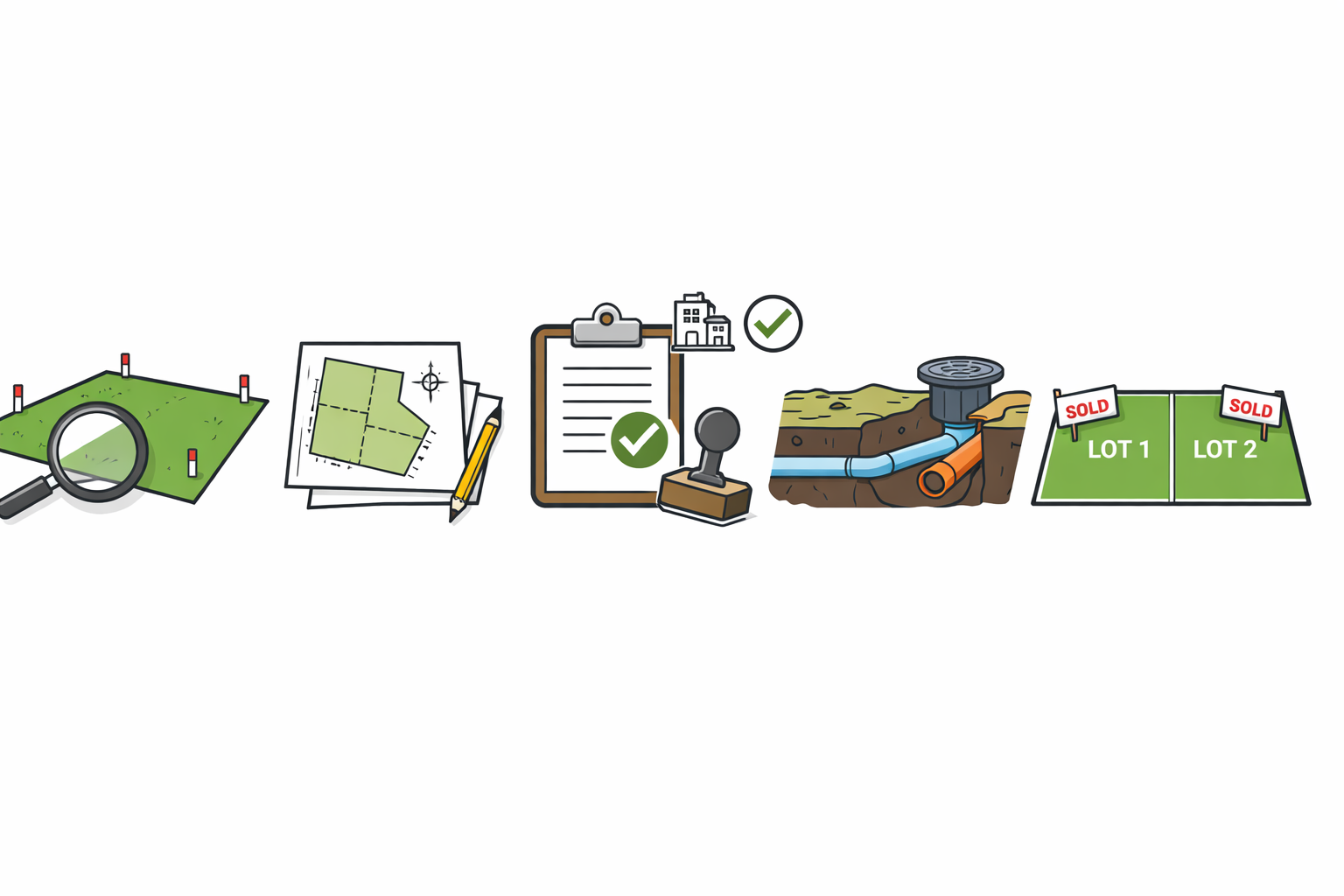
Subdivision process stack: feasibility, planning, servicing, titles, and delivery each add separate timing and cost pressure. Source: DA Leads synthesis of the Australian subdivision process.
Step 1: Due Diligence
This is where most bad subdivision ideas should die.
Before you spend money, check:
- The zone
- Minimum lot size controls
- Overlays and environmental constraints
- Easements
- Whether each future lot can get legal access
If the site fails here, the rest of the process does not matter.
Step 2: Engage a Surveyor Early
Subdivision is not optional without a surveyor. A proper plan of subdivision, title review and boundary check are core to the whole project.
This is also where inconvenient realities often show up:
- Easements running through the wrong part of the block
- Access arrangements that are harder than expected
- Title restrictions or encroachments
Step 3: Get the Planning Path Right
For many smaller projects, subdivision still sits inside a planning-permit or DA style process.
But the exact path depends on the state, council and scale:
- Smaller subdivisions often stay in the normal permit pathway
- Bigger or more strategic projects can trigger a more complex amendment, rezoning or infrastructure-heavy process
This is why one "average subdivision timeline" is a misleading idea. The planning path changes the whole job.
Step 4: Conditions and Works
Approval is usually not the finish line. It is the start of the condition list.
Common post-approval tasks include:
- Drainage and servicing work
- Access and crossover work
- Easements or common-property arrangements
- Engineering plans
- Utility coordination
This is where many subdivision budgets get hit harder than expected.
Step 5: Compliance and Registration
Once the conditions are satisfied, the project still needs the compliance step before new titles can exist.
That usually means:
- Council or authority sign-off on conditions
- A statement of compliance or equivalent certification
- Lodgement of the final plan with the titles office
Only after registration do the new lots become separate legal parcels.
The Real Risk Areas
Subdivision projects usually fail or stall because of one of these:
- Easements
- Drainage
- Access
- Covenant or title restrictions
- Underestimating the conditions attached to approval
That is why the best subdivision operators obsess over site reality before they obsess over resale value.
Why This Matters for Tradies and Contractors
A subdivision approval is never just about titles. It often signals future work for:
- Civil contractors
- Plumbers and drainage trades
- Electricians and service coordinators
- Fencing and landscaping crews
- Builders following the title split
That is why subdivision DAs are useful lead signals even before the lots are registered.
Browse subdivision leads on DA Leads to see the projects already moving through the approval stack.


