
In NSW, a granny flat is a secondary dwelling. On a lot of 450m² or more, many standard projects can use the complying development pathway instead of a full DA. The core size cap is usually 60m², and if the project meets the Code it can be approved in as little as 20 days.
That does not mean "no rules". NSW is fast, but only if the site and design stay inside the Code. Here's what actually matters in 2026.
What Counts as a Secondary Dwelling in NSW?
A secondary dwelling is a self-contained home on the same lot as a principal dwelling. It needs its own kitchen, bathroom and living area. It can sit behind the existing house, attach to it, or in some cases sit above a garage.
The key rules come from the State Environmental Planning Policy (Housing) 2021 and the Codes SEPP. Together, they let many secondary dwellings be assessed as complying development instead of a full council DA, provided the project meets the fixed standards.
The 60sqm Rule
The core rule is simpler than many builders think: under the Housing SEPP, the floor area of a secondary dwelling is generally capped at 60 square metres, unless another planning instrument applying to that land allows more.
Remember that number. If your concept needs more area, check the local instrument early, because the project may fall out of the simple pathway.
60m² is enough for most standard one-bedroom or compact two-bedroom layouts. Most NSW granny-flat builders standardise around it for exactly this reason.
Minimum Lot Size: 450 Square Metres
Your property must have a minimum lot area of 450 square metres to qualify for a secondary dwelling under complying development.
That rules out plenty of smaller infill lots. In established suburbs across Sydney, the Central Coast and regional NSW, however, many residential lots still clear that threshold comfortably.
Complying Development: The Fast Track
If your project meets the Housing SEPP and Codes SEPP standards, you can get a Complying Development Certificate (CDC) instead of a full DA.
| Path | What it means |
|---|---|
| CDC | Fast-track approval by council or a registered certifier against fixed standards |
| Full DA | Council planning assessment when the Code is not available |
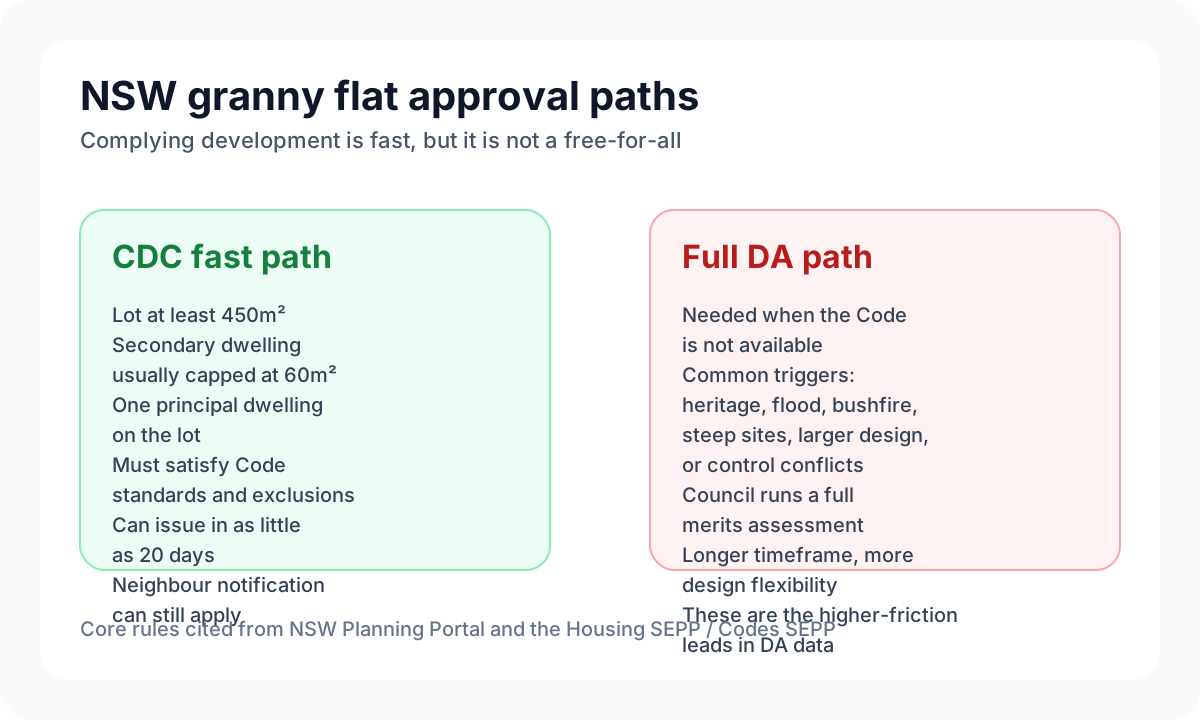
NSW granny flat approval paths: approval friction changes quickly depending on lot, planning pathway, and site constraints. Source: DA Leads synthesis of NSW granny flat approval guidance.
The CDC pathway means:
- 20-day target timeframe. NSW Planning Portal guidance says complying development can be issued in as little as 20 days.
- Fixed standards. The certifier checks the project against the Code. It is not a broad merits-based planning assessment.
- Neighbour notification can still apply. CDC is faster than a full DA, but it is not invisible.
- Less discretion. If the project complies, the approval path is far more predictable than a council DA.
CDC Requirements (Key Ones)
To qualify for CDC approval, the secondary dwelling must meet all of the following, along with the rest of the Code:
- Maximum 60sqm gross floor area
- Minimum lot size 450sqm
- One principal dwelling already on the lot
- Combined floor area caps still apply to the principal dwelling, the secondary dwelling and attached ancillary structures
- Hazard and heritage exclusions still matter, especially flood, bushfire and heritage constraints
- All Code standards must be met, not just the headline size and lot rules
If even one requirement is missed, the project drops to the full DA pathway. Common disqualifiers are heritage constraints, flood mapping, bushfire issues, steep sites, odd lot geometry and designs that push beyond the Code envelope.
Full DA Pathway
When the CDC pathway is not available, you need to lodge a development application with council.
- Council planners assess the design on its merits
- Council notification rules apply instead of the CDC shortcut
- The timeframe is usually slower, but the design flexibility is wider
- This is where more complex granny-flat projects live
If your design exceeds the Code, or the site has constraints that rule out CDC, the DA pathway is the only option.
DAs for secondary dwellings appear in council records and on the NSW Planning Portal. These are the applications that show up on DA Leads, where we track over 8,300 DAs across 125 NSW councils.
Budget Variables That Move the Deal
The mistake builders make is assuming the 60m² rule is the whole story. The bigger budget swings usually come from:
- Site preparation: slope, rock, retaining, tree removal and access constraints
- Service connections: sewer, stormwater, water and electrical upgrades
- Hazard response: flood, bushfire or acoustic requirements
- Approval path: CDC is usually leaner than a full DA with consultants
- Finishes: a standard rental spec and a premium family spec are very different jobs
Site screening matters more than chasing a single "average granny flat cost" number.
Common Mistakes to Avoid
- Assuming every property qualifies. Check lot size, planning controls and hazard mapping before spending money on design.
- Forgetting about services. Sewer, water, stormwater and electrical connections can shift the job economics quickly.
- Ignoring stormwater. Extra hard surface often means more drainage work than owners expect.
- Underestimating site costs. Access, retaining, trees, rock and asbestos can turn a simple job into a hard one.
Finding Granny Flat Opportunities
If you're a builder specialising in granny flats, the DAs that appear in our system are the ones going through the full DA pathway. These tend to be in established suburbs with heritage overlays, flood constraints or other complexities that rule out the CDC fast track. They often involve higher budgets and more design flexibility.
If you want the broader NSW permit context, read what a development application is first. For how other states compare, see granny flat permits in Victoria or granny flat rules in Queensland. Then browse granny flat and secondary dwelling DAs on DA Leads to find active projects.
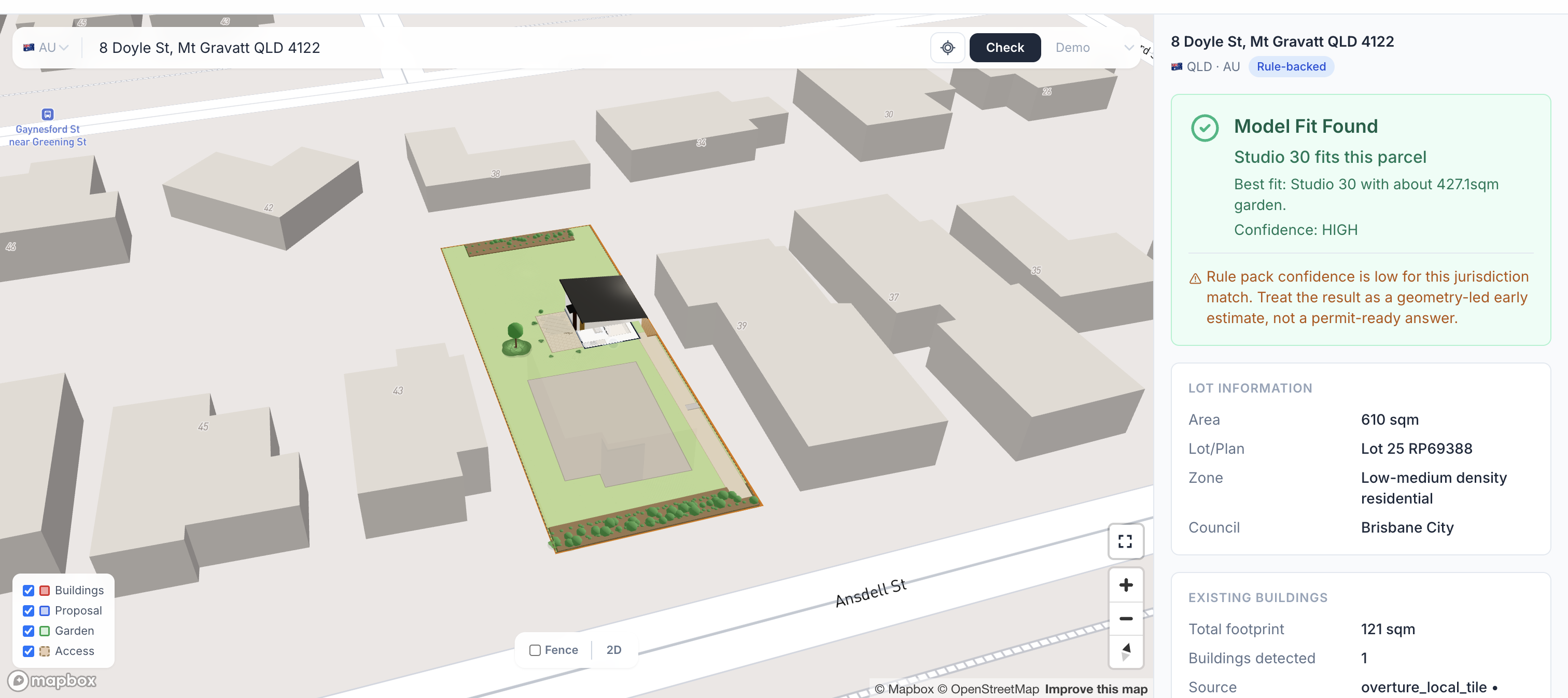
The Granny Flat Feasibility Checker analyses parcel boundaries, existing buildings, zoning rules and recommends granny flat placement with garden plan.


