
With 51 development applications tracked through Dubbo Regional Council, this western NSW city is punching well above its weight for a regional centre. While Sydney's growth corridors get all the headlines, Dubbo is quietly building out its own development pipeline. Worth paying attention. For tradies and developers who have been focused exclusively on the Sydney metro area, Dubbo offers a fundamentally different proposition with less competition, lower overheads, and clients who value reliability over the cheapest possible quote.
For tradies and developers looking beyond the metro squeeze, Dubbo offers something increasingly rare: affordable land, fast approvals, and genuine demand.
| Metric | Value |
|---|---|
| Total DAs | 51 |
| Top category | New residential dwellings |
| Development mix | Residential, commercial, sheds, subdivision |
| Council | Dubbo Regional Council |
| City population | Roughly 42,000 |
| Key advantage | Multiple independent demand drivers (mining, agriculture, tree-change migration) insulate the pipeline from single-sector downturns |
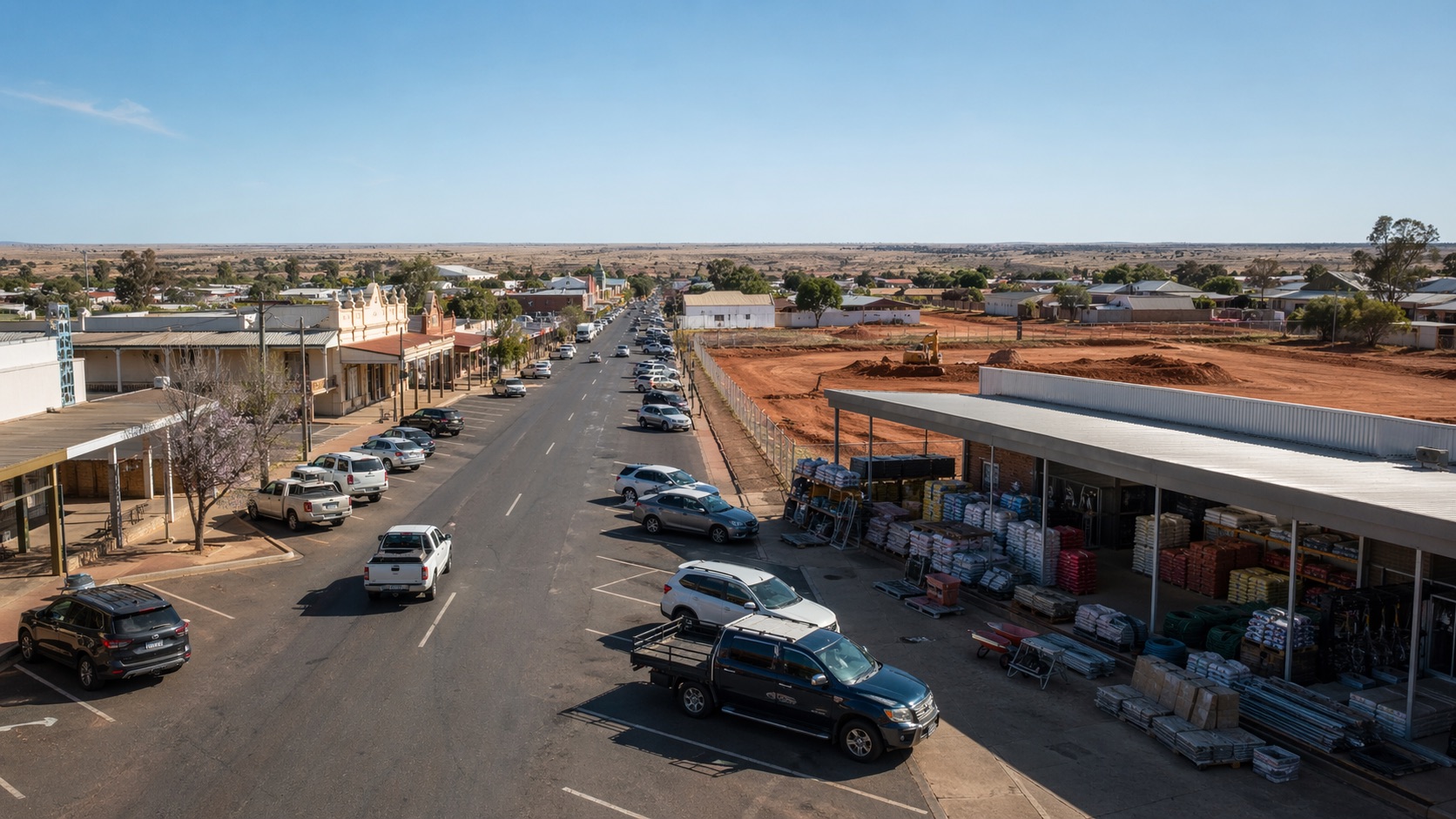
Dubbo's main street: heritage shopfronts, a hardware store, and red earth on a development site. Mining, agriculture, and tree-change migration drive steady demand.
What the DA Data Shows
Dubbo Regional Council's 51 DAs span a mix of residential, commercial, and agricultural-adjacent development. This isn't the high-density apartment boom you see in inner Sydney. It's a spread of new dwellings, sheds, commercial fitouts, and subdivision work that reflects a regional economy diversifying and growing.
The residential share is significant. New house builds and granny flats make up a solid chunk of the pipeline, driven by families and professionals relocating from Sydney and the Central Coast. At the same time, commercial DAs point to business investment in retail, health services, and logistics. If you're new to the DA process, our guide on what a development application actually is covers the basics.
Why Dubbo Is Growing
Three factors are driving development in Dubbo.
Population pressure from the coast. Remote and hybrid work policies have made it viable for professionals to live in regional centres. Dubbo's hospital, university campus (Charles Sturt), and direct flights to Sydney make it one of the most liveable options west of the Blue Mountains.
Infrastructure spending. The NSW Government has invested heavily in the Dubbo Health Service redevelopment and road upgrades connecting the city to surrounding agricultural areas. That kind of public spending creates a multiplier effect for private construction. It compounds fast. When the government builds a new hospital wing or upgrades a highway interchange, the private sector responds with housing subdivisions, retail premises, accommodation facilities, and commercial workshops to service the growing workforce that the public investment attracts.
Agricultural and mining economy. The broader Central West region supports mining (Tomingley Gold), agriculture, and solar farm development. Workers in these industries need housing, and contractors need commercial premises. That demand flows directly into the DA pipeline.
What's Being Built
The development mix in Dubbo tells you a lot about the local economy.
New dwellings are the backbone. Estates on Dubbo's southern and western fringes are being subdivided and built out. Land prices remain a fraction of what you'd pay in the Hunter or Central Coast, which makes greenfield residential development commercially viable. Big difference.
Sheds and outbuildings feature heavily, as you'd expect in a regional centre where properties have the space for them. Farm sheds, workshops, and machinery storage make up a steady stream of applications.
Commercial fitouts are a growing segment. The CBD and surrounding commercial strips have seen upgrades as the population grows and new businesses open. Health, veterinary, and retail premises are all represented in the data.
Subdivision work is ongoing. Larger rural-residential lots on the urban fringe are being carved into smaller residential blocks, bringing with them the civils work (roads, drainage, services) that precedes house construction.
The Tradies Angle
If you're a tradie based in or near Dubbo, the pipeline is broad enough to keep multiple trades busy.
Concreters and earthworks operators benefit from the subdivision and new dwelling activity. Slab pours, driveways, and site preparation are the first trades called on any new residential build.
Fencing and landscaping follow close behind. New estates need boundary fencing, retaining walls, and basic landscaping before handover. In a regional context, the lots tend to be larger, which means bigger jobs per property.
Plumbers, electricians, and HVAC are essential on every new build. With Dubbo's extreme summer temperatures regularly exceeding 35 degrees, air conditioning installation is practically mandatory on every new dwelling.
Shed builders and steel fabricators have a reliable stream of work that metro tradies rarely see. The agricultural and light industrial demand for outbuildings is constant. Unlike residential construction which cycles with interest rates and buyer sentiment, the agricultural shed and workshop pipeline in regional centres like Dubbo runs on its own rhythm tied to farm income, commodity prices, and equipment replacement cycles that rarely align with metro housing market fluctuations.
The competition for work is also lower than in metro areas. Fewer tradies means less price pressure and more repeat business from builders who need reliable subbies. Less competition helps.
The Developer Angle
For developers, Dubbo presents an interesting proposition. Land is affordable. Council approval timeframes are generally shorter than metro equivalents. And the demand is real, not speculative.
A standard subdivision play in Dubbo's growth areas can yield solid returns without the holding costs that eat into margins in Sydney. The numbers work at a different scale, with lower land acquisition costs offsetting the smaller sale prices.
The feasibility fundamentals are straightforward: check zone capacity, confirm service availability, and model the lot yield. Be aware of the hidden costs in property development that can erode margins if missed early. Our feasibility calculator can help you run those numbers for specific sites.
Tracking Dubbo's Pipeline
Dubbo's 51 DAs represent a snapshot of a regional centre in growth mode. The mix of residential, commercial, and agricultural development creates opportunities across multiple trades and development types.
For a deeper look at NSW's regional development trends, explore our NSW insights page. You can also browse all Dubbo Regional Council DAs directly to see what's coming through the pipeline.
Regional centres like Dubbo don't make the national news cycle for development. But the data shows the work is there, and it's growing. The numbers confirm it.


