
Orange sits at 860 metres elevation in the Central Tablelands of NSW, about 250 kilometres west of Sydney. It's cold in winter, hot in summer, and increasingly busy when it comes to development. With 45 DAs tracked through Orange City Council, this regional city is building at a pace that reflects genuine economic growth rather than speculative froth. Not speculative hype. What makes Orange different from many regional towns that have seen short-lived building booms is that the demand here comes from multiple independent economic drivers rather than a single project or policy change.
| Metric | Value |
|---|---|
| Total DAs | 45 |
| Top category | New residential dwellings |
| Development mix | Residential, renovations, commercial, rural outbuildings |
| Council | Orange City Council |
| City population | Roughly 42,000 |
| Key advantage | Broad DA base driven by mining, agriculture, and tree-change migration provides organic and sustained pipeline |
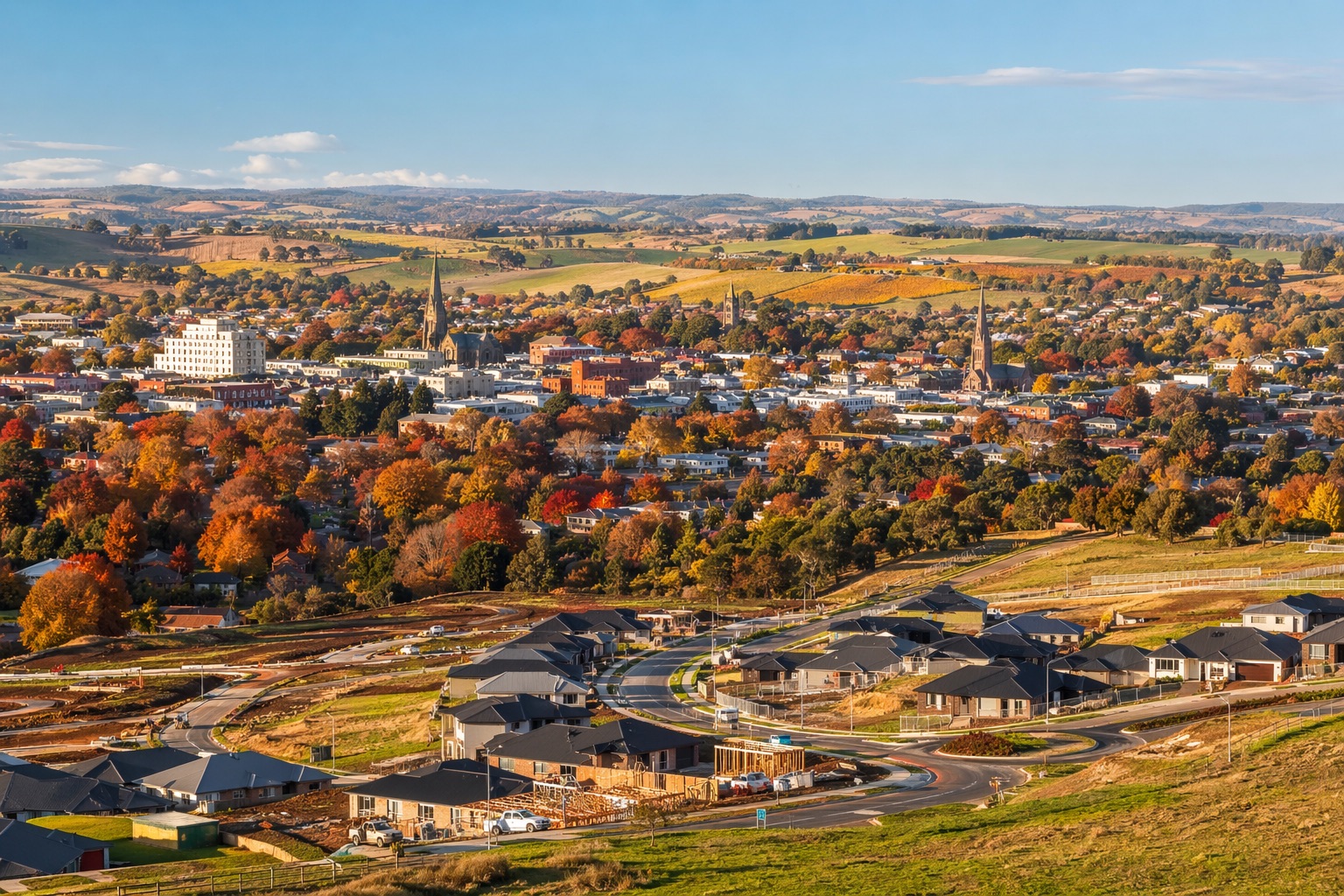
Orange from above: autumn colour in the town centre, new estates on the outskirts, farmland and vineyards beyond. Mining, agriculture, and tree-change migration sustain 45 active DAs.
The Numbers Behind the Growth
Orange City Council's 45 development applications cover a range of project types. Residential new builds lead the count, followed by commercial works and alterations to existing properties. The DA volume is modest compared to Sydney's western suburbs, but for a city of roughly 42,000 people, it signals steady and sustained building activity.
What stands out is the consistency. That really matters. This isn't a one-off spike from a single large development. It's a broad base of applications across different categories, which points to organic demand rather than a single developer driving the numbers.
What's Driving Development in Orange
Mining and resources. The Cadia-Ridgeway mine, operated by Newcrest (now part of Newmont), is one of Australia's largest gold and copper operations. It sits just south of Orange and employs hundreds of workers directly, with thousands more in the supply chain. Mining income flows into the local economy through housing demand, retail spending, and service businesses. The money circulates.
Agricultural wealth. The surrounding region produces wine (Orange is a recognised wine region), stone fruit, cherries, and livestock. Agriculture creates a base of landowners and workers who need housing, sheds, and commercial premises.
Tree-change migration. Like Dubbo, Orange has benefited from the post-pandemic shift toward regional living. The city has a base hospital, schools through to Year 12, a university campus (Charles Sturt), and reliable internet infrastructure. For Sydney professionals working remotely, Orange offers a lifestyle upgrade without giving up essential services.
Health precinct expansion. Orange Health Service is a major regional hospital serving the Central West. Ongoing upgrades and expansion of health facilities have a direct knock-on effect for construction and fitout work. Every hospital upgrade triggers a chain of downstream construction activity including specialist medical fit-outs, accommodation for visiting staff, and retail premises serving the growing health precinct workforce and patient visitors.
What's Being Built
The DA data shows a mix that's typical of a growing regional city.
New residential dwellings form the largest category. Most are standalone houses on the urban fringe, particularly in Orange's northern and eastern growth areas. These aren't townhouse developments or apartment blocks. They're traditional detached homes on decent-sized lots, reflecting what buyers in regional markets actually want. Classic builds. The consistency of the product type is actually an advantage for tradies, because it means the same construction methodology, material specifications, and subcontractor sequencing applies across the majority of jobs rather than each project requiring a different approach and different specialist trades.
Alterations and additions to existing homes are the second major category. Orange has an older housing stock in its inner suburbs, and homeowners are investing in renovations, extensions, and upgrades. Kitchens, bathrooms, and rear extensions are bread-and-butter work for local builders. If you're considering lodging a DA for renovation work, our NSW DA approval process guide covers what to expect.
Commercial and retail applications include shopfits, warehouse modifications, and new premises for businesses serving the growing population. The CBD has seen some revitalisation, with heritage buildings being adapted for modern retail and hospitality use.
Rural outbuildings round out the mix. Sheds, workshops, and farm infrastructure are a constant in any regional council's DA pipeline. Always building. The rural outbuilding segment is one that metro-focused tradies often overlook, but for shed builders, concrete slab specialists, and steel fabricators who understand the agricultural context, it represents reliable year-round work that is largely immune to the residential market cycles that affect house construction volumes.
Tradies: Where the Work Is
For trades operating in the Central West, Orange represents a reliable base of work.
Builders and carpenters have the broadest opportunity. New house construction and renovation work create sustained demand. The building styles tend toward conventional timber-frame and brick veneer, which means standard skillsets apply.
Plumbers and electricians are needed on every project. Orange's cold winters (regularly dropping below zero) mean hydronic heating, gas fitting, and insulation work are more common here than in coastal areas.
Concreters benefit from both new builds and the steady demand for driveways, patios, and shed slabs. Larger lot sizes mean bigger pours per job.
Painters and plasterers find consistent work in the renovation pipeline. Older homes getting modernised need internal replastering, external repainting, and weatherproofing upgrades.
The advantage of a regional market is relationships. Tradies who establish themselves locally build repeat networks with builders and property managers. Word of mouth travels fast in a city of 42,000. Reputation compounds quickly.
Developer Opportunities
Orange offers a development profile that's fundamentally different from metro markets. Land acquisition costs are lower, council processes are generally faster, and the buyer pool is real (owner-occupiers, not investors chasing capital gains).
Small-scale subdivision and infill development work well here. A standard residential block on the fringe can be developed and sold for a margin that makes the numbers work, even at regional price points. The key constraint is typically servicing, with water, sewer, and road access needing to be confirmed early in the feasibility process. Our property development feasibility guide walks through the numbers step by step.
Run the numbers on specific Orange sites using our feasibility calculator. The zone parameters and capacity estimates will help you assess yield before you commit.
Following the Central West Pipeline
Orange's 45 DAs are part of a broader regional growth story playing out across the Central West. Towns like Bathurst, Mudgee, and Parkes are all seeing similar patterns of steady development driven by resources, agriculture, and lifestyle migration. The trend is real.
For tradies and developers who have spent their careers working exclusively in metro markets, Orange represents a fundamentally different operating environment where relationships, reliability, and local knowledge matter more than competitive pricing or scale. Explore all Orange City Council DAs to see what's in the pipeline, or check our NSW insights page for the statewide picture.


