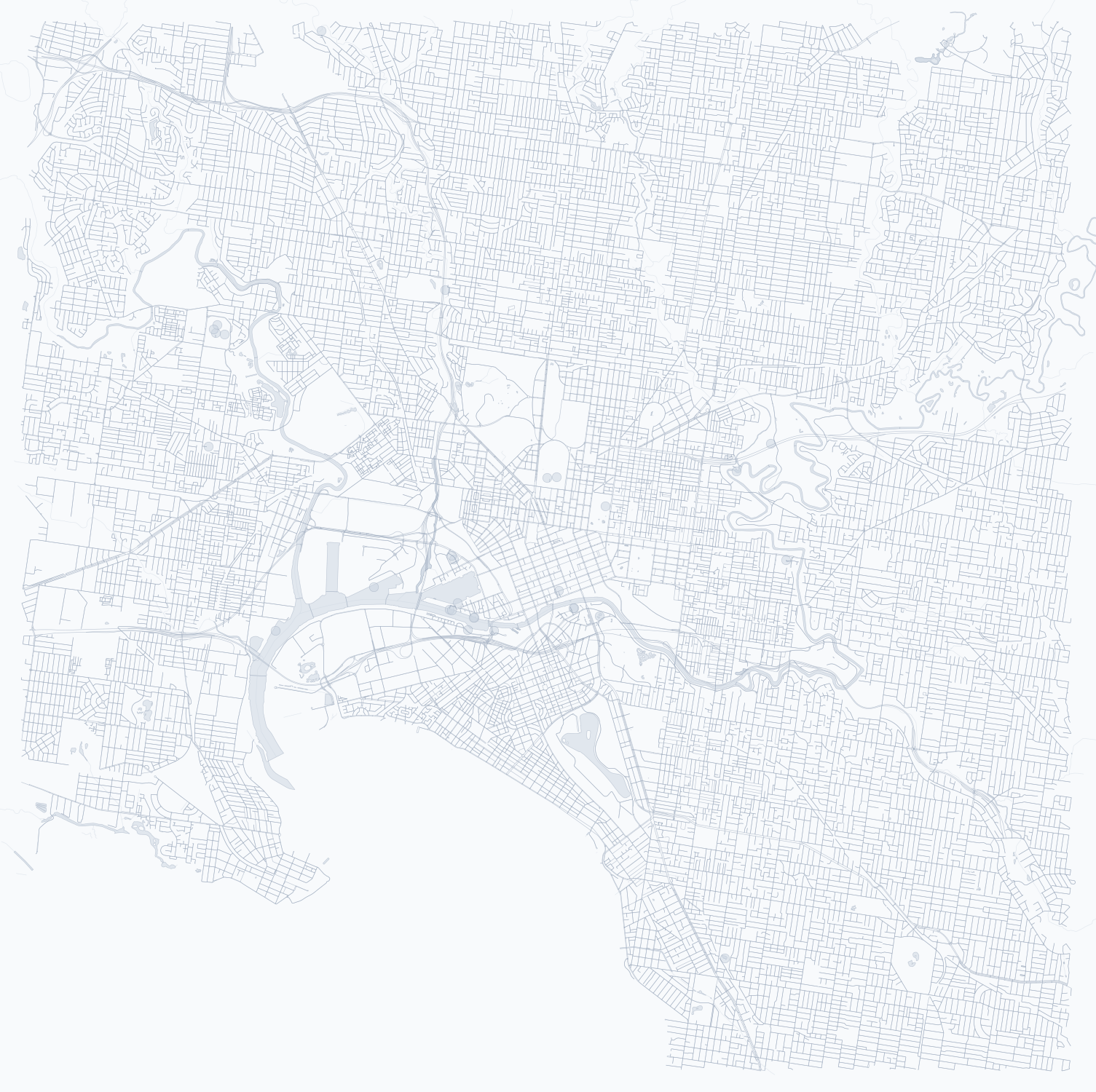
Schools & Childcare in Melbourne
An independent analysis of school quality and childcare ratings across 2,290 schools and 4,600 childcare services in VIC.
Total Schools
2,290
Total Childcare
4,600
Mean ICSEA
1,032
Exceeding NQS
23.4%
Victoria has the highest ICSEA mean (1,032) of any Australian state, with 39.3% of schools scoring above 1,050. Melbourne's inner east (Kew, Canterbury, Hawthorn) dominates the top rankings, but outer suburbs like Vermont and Eltham deliver comparable school quality at lower property prices. 60 suburbs qualify as triple-strong across childcare, primary, and secondary.
Analysis
The Inner East Premium: Reputation vs Reality
Glen Iris, Armadale, and Toorak consistently top Melbourne's ICSEA rankings with scores above 1,165. But ICSEA measures the socio-educational advantage of a school's community, not teaching quality. Government schools in Fitzroy North (ICSEA 1,166) and Brunswick East (1,152) score within 15 points of nearby independent schools charging $30,000+ per year. For families weighing school fees against academic outcomes, the inner north offers a measurably strong alternative to the traditional inner east corridor.
Where Childcare Quality Outperforms School Rankings
Beaumaris stands out as Melbourne's strongest suburb for childcare: 78% of its 9 services rated Exceeding NQS, far above the state average of 23.4%. Yet Beaumaris ranks only mid-table for school ICSEA. This pattern repeats in Port Melbourne (71% Exceeding) and Williamstown (60% Exceeding), both suburbs where childcare quality significantly outpaces their school rankings. For families with young children, the NQS rating of nearby centres may be a more reliable quality signal than ICSEA scores.
Outer Suburbs Worth Watching
Melbourne's school quality drops sharply beyond the middle ring, but pockets of strength survive. Vermont, Eltham, and Ringwood North combine ICSEA scores above 1,050 with childcare Exceeding rates above 50%, at property prices 40-60% below the inner east. These suburbs qualify as triple-strong, meaning primary school, secondary school, and childcare all rank above state medians. With 60 suburbs meeting this threshold across Victoria, the data suggests school quality is less geographically concentrated than property prices imply.
Above ICSEA 1,050
39.3%
Above ICSEA 1,100
20.0%
Childcare Exceeding
23.4%
Top Suburbs by School Quality
Ranked by average ICSEA score (minimum 3 schools per suburb). National average is 1,000.
| Rank | Suburb | ICSEA | Schools |
|---|---|---|---|
| 01 | Glen Iris | 1,175 | 6 |
| 02 | Armadale | 1,173 | 3 |
| 03 | Toorak | 1,169 | 4 |
| 04 | Fitzroy North | 1,166 | 5 |
| 05 | Burwood | 1,163 | 3 |
| 06 | Ivanhoe | 1,161 | 5 |
| 07 | Kew | 1,160 | 11 |
| 08 | Canterbury | 1,160 | 6 |
| 09 | Surrey Hills | 1,159 | 4 |
| 10 | Alphington | 1,155 | 3 |
| 11 | Hawthorn | 1,152 | 8 |
| 12 | South Yarra | 1,152 | 6 |
| 13 | Brunswick East | 1,152 | 3 |
| 14 | Ashburton | 1,152 | 3 |
| 15 | Malvern | 1,150 | 3 |
| 16 | Camberwell | 1,149 | 5 |
| 17 | Hawthorn East | 1,149 | 4 |
| 18 | Kew East | 1,148 | 3 |
| 19 | Brighton East | 1,148 | 4 |
| 20 | Brighton | 1,147 | 8 |
Top Suburbs by Childcare Quality
Ranked by percentage of services rated "Exceeding NQS" (minimum 5 services).
| Rank | Suburb | Rating | Services |
|---|---|---|---|
| 01 | Beaumaris | 78% | 9 |
| 02 | Port Melbourne | 71% | 7 |
| 03 | South Melbourne | 62% | 8 |
| 04 | Williamstown | 60% | 10 |
| 05 | Research | 60% | 5 |
| 06 | Collingwood | 60% | 5 |
| 07 | Albert Park | 60% | 5 |
| 08 | Chirnside Park | 57% | 7 |
| 09 | South Yarra | 57% | 7 |
| 10 | Ringwood North | 57% | 7 |
| 11 | Yarraville | 56% | 9 |
| 12 | Armadale | 56% | 9 |
| 13 | Carlton | 56% | 9 |
| 14 | Ballarat | 55% | 11 |
| 15 | Brighton East | 50% | 12 |
Childcare Quality Areas
How VIC childcare services perform across the seven NQS quality areas.
Frequently Asked Questions
What is a good ICSEA score in Melbourne?
The national average ICSEA is 1,000, and Victoria's state average is 1,032. An ICSEA above 1,050 places a school in the top 39% of Victoria. Above 1,100 is top 20%. The highest-scoring Melbourne suburb is Glen Iris at 1,175. ICSEA measures socio-educational advantage of a school's community rather than teaching quality, so a lower score does not necessarily mean a worse education.
How do school catchment zones work in Victoria?
Every Victorian government school has a designated neighbourhood boundary. Children living within this boundary have a guaranteed place at that school. You can check your catchment zone using the interactive map on this page, which shows primary and secondary school boundaries across the state. Catholic and independent schools are not bound by catchment zones.
How is childcare quality measured in Australia?
All Australian childcare services are assessed against the National Quality Standard (NQS), which covers seven quality areas: educational program, health and safety, physical environment, staffing, relationships with children, partnerships with families, and governance. Services are rated as Exceeding, Meeting, or Working Towards the standard. In Victoria, 23.4% of services are rated Exceeding.
Which Melbourne suburbs have the best schools and childcare combined?
60 Melbourne suburbs qualify as triple-strong, meaning they rank above the state median for primary school ICSEA, secondary school ICSEA, and childcare NQS rating. Top performers include Brighton East, Hawthorn, and Camberwell in the inner east, plus Vermont and Ringwood North in the outer east. Use the suburb rankings on this page to compare specific areas.
Are government or independent schools better in Melbourne?
On average, independent schools in Victoria have higher ICSEA scores than government schools. But ICSEA reflects parental demographics, not teaching outcomes. In suburbs like Fitzroy North and Brunswick East, government schools score within 15 points of nearby independent schools. The gap narrows further when comparing schools in the same suburb, suggesting location matters more than sector.
How often is the school data updated?
School ICSEA data comes from ACARA and is updated annually. Childcare NQS ratings are sourced from the ACECQA National Register and updated as services are re-assessed. School catchment zone boundaries are published by the Victorian Department of Education and reflect the current school year.
Explore Melbourne Schools on the Map
Search any address to see nearby schools colour-coded by ICSEA score, childcare services by NQS rating, and school catchment zone boundaries.