Bongaree
A median age of 67 makes Bongaree one of Australia's oldest suburbs, 27 years above the national median. Nearly 60% of residents own their homes outright, and 63.3% of families are couples without children, reflecting the retiree community on Bribie Island. Household income sits at just the 5.2nd percentile nationally, the bottom 5%, yet mortgage stress is flagged at 43.8% of income and rent stress at 36.3%, both well above the 30% threshold. This paradox arises because even modest housing costs strain fixed retirement incomes.
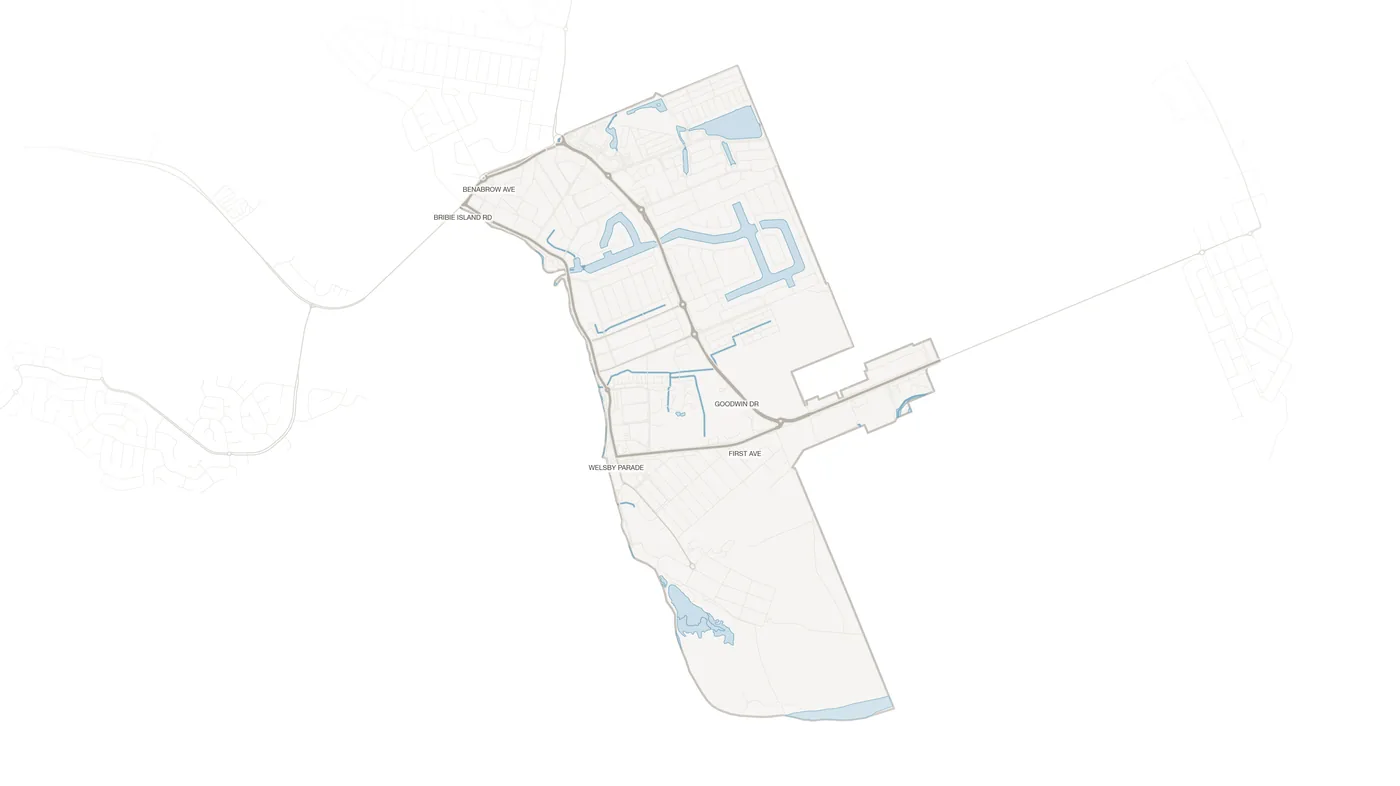
Population
8,162
Median Age
67.0
Household IncomeiMedian weekly household income (ABS Census)
$826/wk
DAs (12 months)iDevelopment Applications lodged in the past year
24
Median House
$402K
Estimated from rent (2025)
The estimated $402,000 median house price is among the lowest on the Moreton Bay coast. Separate houses make up 63.8%, with semi-detached at 28.1% and apartments at 5.8%, so downsizer-friendly options exist. Three-bedroom homes dominate at 42.0%, and 2-beds at 32.6% cater to the retiree demographic. Mortgage holders are only 14.4% of residents, far below the national average, because most buyers are retirees purchasing outright. Vacancy at 11.9% reflects seasonal and holiday occupancy. Turnover at 26.0% is high, consistent with retirees arriving and passing through.
For Buyers
The estimated $402,000 median house price is among the lowest on the Moreton Bay coast. Separate houses make up 63.8%, with semi-detached at 28.1% and apartments at 5.8%, so downsizer-friendly options exist. Three-bedroom homes dominate at 42.0%, and 2-beds at 32.6% cater to the retiree demographic. Mortgage holders are only 14.4% of residents, far below the national average, because most buyers are retirees purchasing outright. Vacancy at 11.9% reflects seasonal and holiday occupancy. Turnover at 26.0% is high, consistent with retirees arriving and passing through.
For Investors
Weekly rent of $300 against a $402,000 estimated median produces about 3.9% gross yield, moderate for Queensland. Rent stress at 36.3% means tenants struggle, creating turnover risk. The 25.8% renter share is decent, but vacancy at 11.9% is high. Only 24 DAs were lodged in 12 months, so supply growth is slow. Labour force participation at just 23.6% means most residents are retired and on pensions, limiting rent growth. Mortgage stress at 43.8% suggests financial pressure even among owners. This is a capital preservation market rather than a growth play.
Development Activity
Total DAs
48
Last 12 Months
24
YoY ChangeiYear-over-year change in DA lodgements
+14.3%
Avg DA CostiAverage estimated cost per DA in the past year
N/A
Monthly DA Lodgements
DA Categories
Schools in Bongaree iICSEA: school advantage index. 1000 = national avg, higher = more advantaged
Bribie Island State High School
7-12 · 1020 students
Bribie Island State School
Prep-6 · 427 students
Demographics
The median age of 67 is 27 years above the national figure, the defining demographic fact. Couples without children at 63.3% of families is among the highest in Australia. English ancestry dominates at 4,013 residents, followed by Irish (1,123), Scottish (1,081), and German (549). Only 23.9% were born overseas, slightly above the national average. University attainment at 17.9% is 12.2pp below the national average. Average household size of 1.8 is well below the national 2.5. Community/personal workers (306) just edge out professionals (301) as the top occupation, consistent with the aged-care economy.
Age Distribution
Bedrooms
Dwelling Structure
63.8%
Houses
28.1%
Townhouse
5.8%
Apartment
Tenure
The estimated median is $402,000. Outright ownership at 59.8% dominates, far above the national average, reflecting the retiree buyer profile. Mortgage holders at only 14.4% are a small minority. Separate houses at 63.8% and semi-detached at 28.1% provide the main stock. Studios and 1-beds at 7.4% cater to singles. Both stress indicators are above threshold: mortgage-to-income at 43.8% and rent-to-income at 36.3%, driven by low incomes (5.2nd percentile) rather than high housing costs. Vacancy at 11.9% reflects the holiday-home component on Bribie Island.
Mortgage / mo
$1,568
Rent / wk
$300
HH Size
1.8
Personal Income / wk
$491
Vacancy Ratei% of dwellings unoccupied on Census night (ABS 2021)
11.9%
Unoccupied
546
Rent / IncomeiMedian rent as % of household income. Over 30% = housing stress
36.3% stressed
Mortgage / IncomeiMedian mortgage as % of household income. Over 30% = housing stress
43.8% stressed
Community Profile
Languages Spoken at Home
Ancestry
Household Composition
63.3%
Couples, no children
5,449
Total families
Economy & Employment
Healthcare dominates employment at 22.7% (269 workers), consistent with the aged-care needs of a suburb where 14.1% need daily assistance (1,098 people). Construction (13.0%), education (12.7%), retail (7.5%), and hospitality (6.3%) follow. Unemployment at 9.1% is nearly double the national average, and participation at just 23.6% is among the lowest in Australia, with 5,076 people not in the labour force. Community/personal workers (306) are the top occupation, reflecting the care economy. Christianity (4,687 adherents) is the dominant religion. Volunteering at 15.8% is above the national average.
Socio-Economic Indexes (SEIFA)iABS index ranking suburbs from 1 (most disadvantaged) to 10 (most advantaged)
Full-time
57.0%
Part-time
33.9%
Participation
23.6%
Employed
1,634
Occupations
Top Industries
University
17.9%
Postgraduate
3.5%
Born Overseas
23.9%
Dwellings
4,051
Transport to Work
Car dependence at 85.9% dominates, but walking/cycling captures 5.8%, above average for a regional setting. Public transport is minimal at 2.0%. Two schools serve the area: Bribie Island State High School (Government, ICSEA 969, 1,020 students) and Bribie Island State School (Government primary, ICSEA 942, 427 students). Both ICSEA scores sit below the national median of 1000. Need-for-assistance at 14.1% is among the highest in Queensland. The volunteering rate of 15.8% and strong community/personal services sector suggest active community support networks despite the disadvantage profile.
Drive
85.9%
Public Transport
2.0%
Walk / Cycle
5.8%
Work from Home
N/A
National Ranking iPercentile rank among ~15,000 AU suburbs. 90% = higher than 90% of suburbs
How Bongaree compares to ~15,000 Australian suburbs
Frequently Asked Questions
Is Bongaree a good suburb to live in?
Bongaree suits retirees seeking affordable island living, with a $402,000 estimated median and 59.8% outright ownership. However, household income sits at the 5.2nd percentile nationally, and 14.1% need daily assistance. Both schools have ICSEA scores below the national median of 1000.
What is the median house price in Bongaree?
The estimated median house price is $402,000, derived from rental data. Monthly mortgage repayments average $1,568, but mortgage-to-income sits at 43.8%, well above stress levels, because household income is at the 5.2nd percentile nationally.
What schools are in Bongaree?
Bongaree has 2 schools: Bribie Island State High School (Government secondary, ICSEA 969, 1,020 students) and Bribie Island State School (Government primary, ICSEA 942, 427 students). Both ICSEA scores sit below the national median of 1000.
Is Bongaree safe?
Suburb-level crime data is not available for Bongaree. The low income profile (5.2nd percentile) and high unemployment (9.1%) are risk indicators, but the 59.8% outright ownership rate and 15.8% volunteering rate suggest community stability. 14.1% need daily assistance.
Is Bongaree good for property investment?
Gross yield sits at roughly 3.9% ($300/week vs $402,000 median). However, vacancy at 11.9% is high, rent stress at 36.3% means tenants struggle, and participation is just 23.6%. This is a capital preservation market. Only 24 DAs in 12 months show minimal new supply.
How is Bongaree's population changing?
The median age of 67 is 27 years above national. Turnover at 26.0% is high, driven by retirees cycling through. Only 14.4% hold mortgages because most are retiree cash buyers. With 5,076 not in the labour force and 14.1% needing assistance, the suburb ages in place.
How to read these comparisons
Phrases like "above the national average" reference the unweighted median across Australian suburbs with more than 1,000 residents, not population-weighted national figures. Suburb-level medians are more useful for ranking suburbs against each other; ABS census headlines are population-weighted (so dominated by Sydney and Melbourne) and can read very differently.
Current baseline (refreshed 2026-05-10): median age 40, university-educated 30.1%, born overseas 21.6%, average household size 2.5 people.
Data sources: ABS 2021 Census (demographics, income, tenure), state Valuer-General (house prices), Department of Jobs SALM (unemployment), ACARA (school ICSEA), state Crime Statistics agencies (offences), council DA portals (development applications). Population forecasts use a Hamilton-Perry cohort model calibrated to ABS ERP.
Explore Bongaree on the Map
View parcels, zoning overlays, DA applications, schools and more.
Open Interactive Map