Collingwood Park
Real income grew 46.6% over the decade, the highest in this batch by a wide margin, yet Collingwood Park remains in IRSAD decile 2, revealing how rapid wage growth can coexist with persistent socio-economic disadvantage when starting from a low base. The median age of 31, nine years below the national figure, makes this one of the youngest suburbs in the analysis, and the population surged 41.8% over ten years. Samoan ancestry (719) is the fourth-largest group, an unusual concentration for Southeast Queensland that shapes the suburb's cultural character. The $433,000 estimated median and 3.9% vacancy rate make this one of the tightest affordable markets in the Ipswich corridor.
Population
9,246
Median Age
31.0
Household IncomeiMedian weekly household income (ABS Census)
$1,755/wk
DAs (12 months)iDevelopment Applications lodged in the past year
0
Median House
$433K
Estimated from rent (2025)
The $433,000 estimated median is among the lowest in this batch, offering genuine entry-level buying in Greater Brisbane. The stock is 91.8% detached houses with 62.3% having four or more bedrooms, providing family-scale housing at affordable prices. Monthly mortgage repayments of $1,580 produce a mortgage-to-income ratio of just 20.8%, well below the stress threshold. The suburb is heavily mortgaged at 47.4%, with only 16.7% owning outright, indicating a young cohort still building equity. Car dependence is extreme at 88.8%, with public transport at 2.7% and walking/cycling at 1.1%, so vehicle costs are a necessary addition to housing expenses.
For Buyers
The $433,000 estimated median is among the lowest in this batch, offering genuine entry-level buying in Greater Brisbane. The stock is 91.8% detached houses with 62.3% having four or more bedrooms, providing family-scale housing at affordable prices. Monthly mortgage repayments of $1,580 produce a mortgage-to-income ratio of just 20.8%, well below the stress threshold. The suburb is heavily mortgaged at 47.4%, with only 16.7% owning outright, indicating a young cohort still building equity. Car dependence is extreme at 88.8%, with public transport at 2.7% and walking/cycling at 1.1%, so vehicle costs are a necessary addition to housing expenses.
For Investors
Renters at 35.9% provide a solid tenant pool, and the 3.9% vacancy rate is the lowest in this batch, indicating tight rental conditions. Weekly rent of $340 against a $433,000 estimated median produces a gross yield around 4.1%, attractive for the Ipswich corridor. Zero development applications in 12 months means no new supply, which combined with the low vacancy should support rental pricing. Population growth of 2.36% per year (269 persons) is strong, driven almost entirely by overseas migration (416 net/year) with minimal internal migration. The young demographic (median age 31) suggests a growing family base that will need housing for years.
Development Activity
Total DAs
1
Last 12 Months
0
YoY ChangeiYear-over-year change in DA lodgements
-100.0%
Avg DA CostiAverage estimated cost per DA in the past year
N/A
Monthly DA Lodgements
DA Categories
Schools in Collingwood Park iICSEA: school advantage index. 1000 = national avg, higher = more advantaged
WoodLinks State School
Prep-6 · 828 students
Challenge Trade and Business College
12 · 7 students
Collingwood Park State Secondary College
7-8 · 256 students
Collingwood Park State School
Prep-6 · 497 students
Demographics
English ancestry leads at 3,196, but Samoan (719) is the fourth-largest group, an unusual concentration for Ipswich that is well above the national norm. The 31.4% born overseas is 9.8 points above the national average. Samoan (186 speakers) dominates non-English languages, followed by Hindi (42), Punjabi (29), Arabic (23), and Mandarin (21). University qualifications at 21.0% are 9.1 points below the national average, consistent with the IEO decile 2 rating. Average household size of 3.0 is well above the national 2.5, and couples with children (3,961) far outnumber couples without (1,359), confirming a young-family suburb.
Age Distribution
Bedrooms
Dwelling Structure
91.8%
Houses
8.1%
Townhouse
0.1%
Apartment
Tenure
Mortgaged households at 47.4% form the largest tenure group, well above the national average, while just 16.7% own outright and 35.9% rent. The 91.8% detached housing stock with 62.3% four-plus bedrooms reflects estate development targeting families. Apartments are virtually absent at 0.1%, and semi-detached at 8.1% is minor. The estimated $433,000 median places Collingwood Park firmly in the affordable bracket. Mortgage-to-income at 20.8% and rent-to-income at 19.4% are both comfortably below stress thresholds, making this one of the least housing-stressed suburbs in the analysis despite the lower income base (61.7th percentile).
Mortgage / mo
$1,580
Rent / wk
$340
HH Size
3.0
Personal Income / wk
$804
Vacancy Ratei% of dwellings unoccupied on Census night (ABS 2021)
3.9%
Unoccupied
119
Rent / IncomeiMedian rent as % of household income. Over 30% = housing stress
19.4%
Mortgage / IncomeiMedian mortgage as % of household income. Over 30% = housing stress
20.8%
Community Profile
Languages Spoken at Home
Ancestry
Household Composition
17.2%
Couples, no children
7,904
Total families
Economy & Employment
Healthcare dominates at 21.2% (560 workers), well above the next sectors: Education at 10.0% (266), Retail at 9.0% (238), Manufacturing at 8.8% (234), and Public Admin at 7.5% (199). Community/Personal workers (631) lead occupations, followed by Labourers (623) and Clerical/Admin (591), a blue-collar-leaning profile. Machinery/Drivers at 517 is notably high, consistent with the Ipswich industrial corridor. Full-time employment at 65.9% is above the national average, but unemployment at 7.5% is also elevated. SEIFA IRSAD decile 2 and IEO decile 2 confirm disadvantage, while IER decile 4 suggests some economic resources are present.
Unemployment
9.3%
Labour Force
8,259
Unemployed
772
Quarterly Trend
Source: SALM Dec-25
Socio-Economic Indexes (SEIFA)iABS index ranking suburbs from 1 (most disadvantaged) to 10 (most advantaged)
Full-time
65.9%
Part-time
26.6%
Participation
62.9%
Employed
3,971
Occupations
Top Industries
University
21.0%
Postgraduate
3.8%
Born Overseas
31.4%
Dwellings
2,940
Transport to Work
Car dependence is extreme at 88.8%, with public transport at 2.7% and walking/cycling at 1.1%, reflecting the Ipswich corridor's limited transit infrastructure. Four schools serve the suburb. WoodLinks State School (Government, ICSEA 981, 828 students) and Collingwood Park State School (Government, ICSEA 958, 497 students) provide primary education near the national benchmark. Collingwood Park State Secondary College (Government, ICSEA 962, 256 students) covers secondary. ICSEA scores sit slightly below the 1,000 benchmark, consistent with the IRSAD decile 2 rating. The 3.9% vacancy rate and low housing stress ratios make day-to-day affordability a genuine strength.
Drive
88.8%
Public Transport
2.7%
Walk / Cycle
1.1%
Work from Home
N/A
Population Forecast
+2.36%/yr
(+269 people/yr)
EstablishedPopulation grows at 2.36% per year (269 persons), well above the national average for established suburbs. The 41.8% ten-year change reflects rapid expansion. The suburb recovered from a 4.9% COVID dip, bouncing back 18.0% from the pandemic low of 9,351 to the current 11,034. Overseas migration at 416 net/year is the sole growth driver, with internal migration near zero. The young share declined 3.3 points, but the working-age share grew 6.1 points, suggesting the suburb is aging from very young to prime working age, a positive economic shift. Real income growth of 46.6% over the decade is the highest in this batch, compared to the national average of roughly 10-15%.
Historical + Forecast
Hamilton-Perry + Holt smoothing on ERP 2001-2025
Age Cohort Forecast
Primary Driver
Overseas Migration
Net Overseas / yr
+416
Net Internal / yr
+26
Gentrification Signal
Early signs
Strong overseas inflow +416/yr, COVID recovered (-5% dip → full recovery)
National Ranking iPercentile rank among ~15,000 AU suburbs. 90% = higher than 90% of suburbs
How Collingwood Park compares to ~15,000 Australian suburbs
Frequently Asked Questions
Is Collingwood Park a good suburb to live in?
Collingwood Park suits young families seeking affordable housing in Greater Brisbane. The $433,000 median, 62.3% four-plus bedroom homes, and mortgage-to-income of 20.8% deliver genuine affordability. The median age of 31 (9 years below national) and household size of 3.0 confirm a young-family orientation. The trade-off is IRSAD decile 2 disadvantage, 88.8% car dependence, and 7.5% unemployment.
What is the median house price in Collingwood Park?
The estimated median is $433,000 (derived from rent, 2025). Monthly mortgage repayments of $1,580 produce a mortgage-to-income ratio of 20.8%, well below the stress threshold. Median weekly rent is $340. No PSI price history is available for trend analysis.
What schools are in Collingwood Park?
Four schools serve the suburb. WoodLinks State School (Government, ICSEA 981, 828 students) is the largest primary. Collingwood Park State School (Government, ICSEA 958, 497 students) provides an additional primary option. Collingwood Park State Secondary College (Government, ICSEA 962, 256 students) covers secondary education. All sit slightly below the national 1,000 ICSEA benchmark.
Is Collingwood Park safe?
Crime data is not available for Collingwood Park in the current dataset. IRSD decile 2 indicates higher socio-economic disadvantage, which nationally correlates with above-average crime rates. The 72.1% residential stability rate is moderate. The 5.7% needing assistance and the young demographic (median age 31) are contextual factors.
Is Collingwood Park good for property investment?
Gross yield of approximately 4.1% ($340/week on $433,000) is attractive. The 3.9% vacancy rate is the lowest in this batch, indicating tight rental conditions. Zero DAs in 12 months mean no new supply pressure. Population growth of 2.36% annually provides strong demand fundamentals. The 35.9% renter share ensures tenant depth. Real income grew 46.6% over the decade, the highest in this dataset.
How is Collingwood Park's population changing?
Growth of 2.36% per year (269 persons) is rapid. The suburb bounced back 18.0% from a 4.9% COVID dip, now at 11,034. Overseas migration (416 net/year) drives growth. The working-age share grew 6.1 points over the decade, suggesting maturation from a very young suburb to a prime working-age one. Real income surged 46.6% over the decade, the strongest growth in this batch.
How to read these comparisons
Phrases like "above the national average" reference the unweighted median across Australian suburbs with more than 1,000 residents, not population-weighted national figures. Suburb-level medians are more useful for ranking suburbs against each other; ABS census headlines are population-weighted (so dominated by Sydney and Melbourne) and can read very differently.
Current baseline (refreshed 2026-05-10): median age 40, university-educated 30.1%, born overseas 21.6%, average household size 2.5 people.
Data sources: ABS 2021 Census (demographics, income, tenure), state Valuer-General (house prices), Department of Jobs SALM (unemployment), ACARA (school ICSEA), state Crime Statistics agencies (offences), council DA portals (development applications). Population forecasts use a Hamilton-Perry cohort model calibrated to ABS ERP.
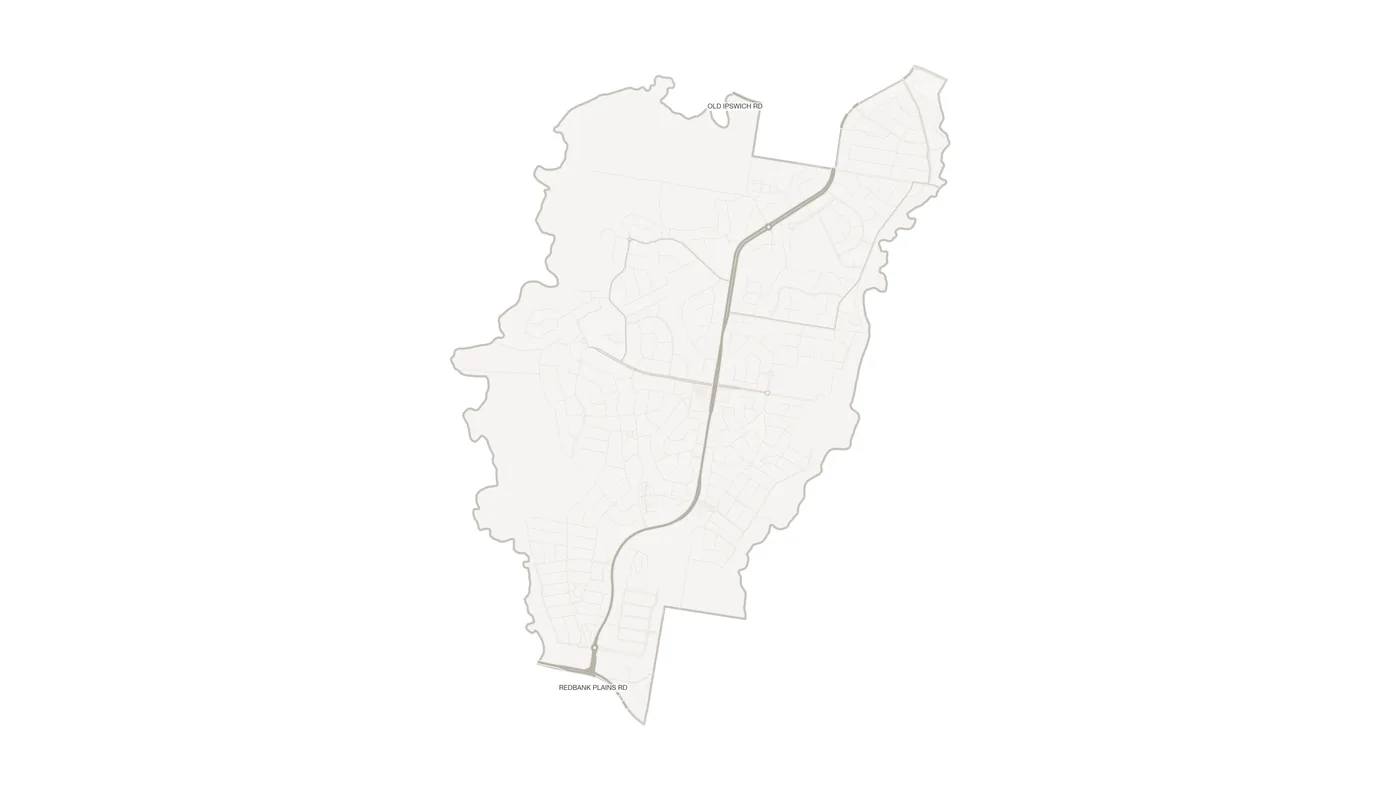
Explore Collingwood Park on the Map
View parcels, zoning overlays, DA applications, schools and more.
Open Interactive Map