Cossack
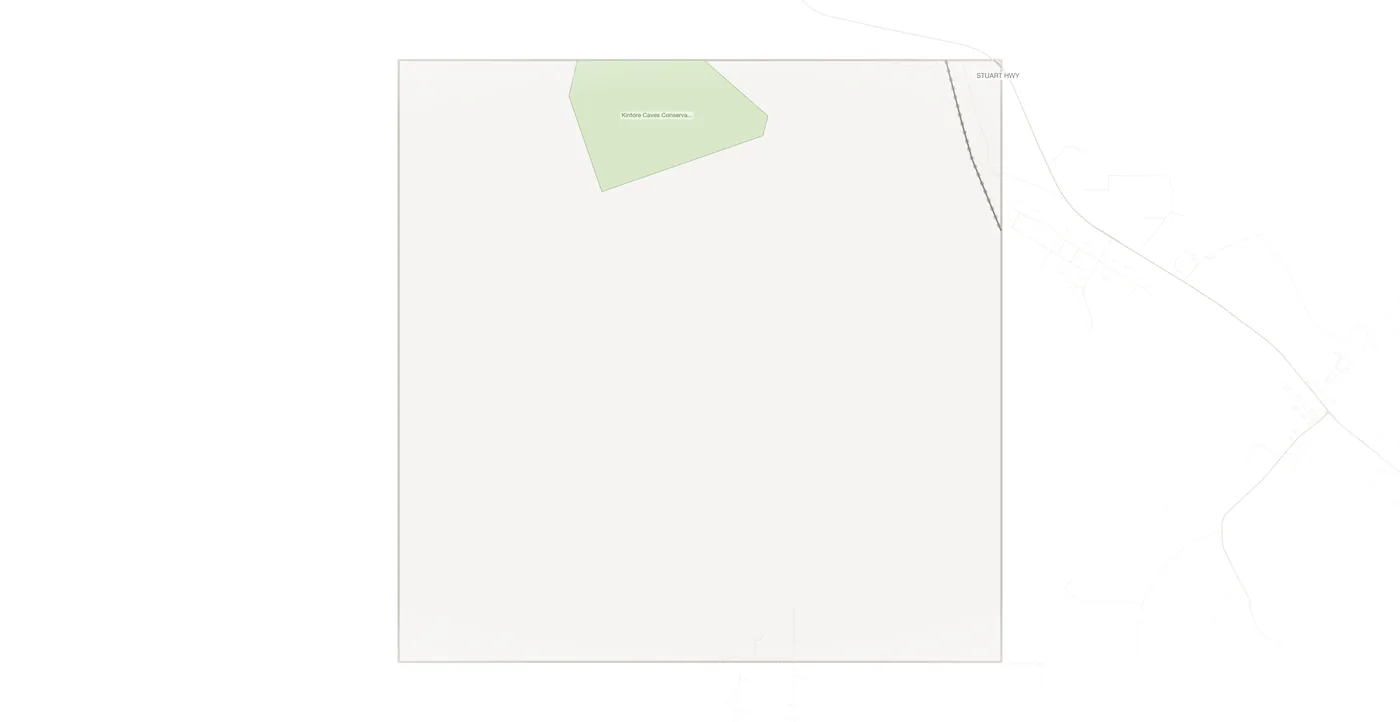
With a household income sitting at the 87th percentile nationally yet a median house price of just $370,000, Cossack presents one of the more striking affordability contrasts in the Northern Territory. The suburb covers 256.95 square kilometres with 1,293 residents at a density of 5.0 persons per km2, placing it firmly in the low-density fringe. More than 90% of dwellings are separate houses and owner-occupancy is high: 73.2% of households either own outright or are paying a mortgage. The vacancy rate of 12.0% is elevated compared to most capital markets, which matters for anyone weighing up rental yield against risk.
Population
1,293
Median Age
39.0
Household IncomeiMedian weekly household income (ABS Census)
$2,257/wk
DAs (12 months)iDevelopment Applications lodged in the past year
0
Median House
$370K
Estimated from rent (2025)
At $370,000, the median house price in Cossack sits well below the national median for comparable detached suburban stock, making it accessible for buyers who carry a mortgage. Monthly repayments average $2,000 and the mortgage-to-income ratio is 20.5%, below the 30% stress threshold, giving owners meaningful financial headroom. Separate houses account for 90.3% of the housing stock, and the bedroom mix skews larger: 34.2% of dwellings have 4 or more bedrooms and 37.4% have 3 bedrooms. Outright owners make up 32.1% of households and mortgage holders 41.1%, suggesting a maturing ownership base rather than a speculative market.
For Buyers
At $370,000, the median house price in Cossack sits well below the national median for comparable detached suburban stock, making it accessible for buyers who carry a mortgage. Monthly repayments average $2,000 and the mortgage-to-income ratio is 20.5%, below the 30% stress threshold, giving owners meaningful financial headroom. Separate houses account for 90.3% of the housing stock, and the bedroom mix skews larger: 34.2% of dwellings have 4 or more bedrooms and 37.4% have 3 bedrooms. Outright owners make up 32.1% of households and mortgage holders 41.1%, suggesting a maturing ownership base rather than a speculative market.
For Investors
The rental component of Cossack sits at 26.8% of households with weekly rent around $250, which against a $370,000 median implies a gross yield near 3.5%. That figure is modest by regional NT standards but the 12.0% vacancy rate is the key risk, running higher than most metropolitan markets and signalling that demand is not consistently deep. No development applications were recorded in the past 12 months, which limits future supply pressure but also suggests limited institutional confidence in near-term growth. The 22% annual turnover rate means roughly 1 in 5 households changes each year, giving landlords reasonably frequent re-let cycles but also indicating a less rooted tenant base.
Demographics
The median age of 39 is 1.0 year below the national figure, giving Cossack a slightly younger tilt than the national average. University qualifications at 16.6% run 13.5 points below the national benchmark, consistent with the construction and trade-dominant employment profile. Overseas-born residents account for just 10.8% of the population, which is 10.8 points below national, and ancestry is strongly Anglo-Celtic: English (387), Irish (104) and Scottish (92) are the three largest groups after the uncoded ancestry category. Average household size of 2.8 is 0.3 above national, with couples-with-children making up 47.9% of families, the most common household form.
Age Distribution
Bedrooms
Dwelling Structure
90.3%
Houses
N/A
Townhouse
N/A
Apartment
Tenure
The housing stock in Cossack is dominated by detached houses at 90.3%, higher than most comparable NT suburbs. Tenure splits across three main groups: 32.1% own outright, 41.1% carry a mortgage and 26.8% rent. The 4-plus bedroom share of 34.2% and 3-bedroom share of 37.4% mean smaller dwellings are a minority, reflecting the family-oriented nature of the area. Rent-to-income is 11.1%, comfortable relative to national norms, and mortgage-to-income at 20.5% is below stress thresholds. With a median price estimated at $370,000 and rent at $250 per week, the market sits well below the national median in both metrics.
Mortgage / mo
$2,000
Rent / wk
$250
HH Size
2.8
Personal Income / wk
$1,077
Vacancy Ratei% of dwellings unoccupied on Census night (ABS 2021)
12.0%
Unoccupied
51
Rent / IncomeiMedian rent as % of household income. Over 30% = housing stress
11.1%
Mortgage / IncomeiMedian mortgage as % of household income. Over 30% = housing stress
20.5%
Community Profile
Languages Spoken at Home
Ancestry
Household Composition
29.8%
Couples, no children
912
Total families
Economy & Employment
Healthcare leads at 17.0% of local workers (67 people), followed by Public Administration at 15.0% (59) and Construction at 12.7% (50), a mix combining government services with infrastructure activity typical of regional NT. By occupation, Managers (110) outnumber Professionals (83) and Clerical/Admin workers (85), suggesting a supervisory-heavy public sector skew. The unemployment rate is 4.7% and the full-time employment rate is 78.7%, with 252 residents not in the labour force on a participation rate of 56.4%. No SEIFA decile data is available, so economic advantage comparisons rely on the 87th percentile household income rank.
Socio-Economic Indexes (SEIFA)iABS index ranking suburbs from 1 (most disadvantaged) to 10 (most advantaged)
Full-time
78.7%
Part-time
16.6%
Participation
56.4%
Employed
553
Occupations
Top Industries
University
16.6%
Postgraduate
5.0%
Born Overseas
10.8%
Dwellings
350
Transport to Work
Private car use dominates at 88.5% of commuters, well above the national average, because the 256.95 km2 footprint makes active or public transit impractical. Walking and cycling still account for 3.6% of trips. No schools are recorded within the Cossack boundary, so families rely on neighbouring suburbs. The volunteering rate of 22.5% is notably high, and only 3.7% of residents (40 people) need daily assistance. Financial stress is low: rent-to-income at 11.1% and mortgage-to-income at 20.5% both sit below national stress thresholds, giving most households comfortable headroom.
Drive
88.5%
Public Transport
N/A
Walk / Cycle
3.6%
Work from Home
N/A
National Ranking iPercentile rank among ~15,000 AU suburbs. 90% = higher than 90% of suburbs
How Cossack compares to ~15,000 Australian suburbs
Frequently Asked Questions
Is Cossack a good suburb to live in?
Cossack suits buyers and families who prioritise space and affordability. Household income ranks at the 87th percentile nationally, yet the median house price is just $370,000. Mortgage-to-income sits at 20.5%, well below the 30% stress threshold. The main trade-offs are limited public transport, no recorded schools within the boundary, and a 12.0% vacancy rate that reflects thinner demand than metropolitan markets.
What is the median house price in Cossack?
The median house price is estimated at $370,000 (2025 estimate derived from rent). Weekly rent averages $250 and monthly mortgage repayments run about $2,000. The mortgage-to-income ratio of 20.5% is comfortably below the 30% stress level, making Cossack affordable relative to national house price benchmarks.
What schools are in Cossack?
No schools are recorded inside the Cossack boundary in this dataset. Families rely on schools in neighbouring NT suburbs. University qualifications locally are 16.6%, which is 13.5 points below the national average, consistent with a workforce concentrated in trades, healthcare and public administration rather than professional knowledge roles.
Is Cossack safe?
Detailed crime statistics are not available for Cossack in this dataset. As an indirect indicator, only 3.7% of the 1,293 residents need daily assistance and the volunteering rate of 22.5% suggests active community engagement, both associated with lower social disadvantage. No SEIFA decile data is available to provide a formal disadvantage ranking.
Is Cossack good for property investment?
Weekly rent of $250 against a $370,000 median implies a gross yield near 3.5%, modest by regional standards. The 12.0% vacancy rate is the main risk, running higher than most capital-city markets. There were zero development applications in the past 12 months, limiting near-term supply pressure but also suggesting limited growth momentum. Income is strong at the 87th percentile nationally, which supports rental capacity.
How is Cossack's population changing?
Cossack has a population of 1,293 across 256.95 km2, with no official forecast data available for this dataset. The annual residential turnover rate is 22.0%, meaning 78% of residents remained at the same address. Zero development applications in the past 12 months suggest the area is in a stable, low-activity phase rather than a growth cycle.
How to read these comparisons
Phrases like "above the national average" reference the unweighted median across Australian suburbs with more than 1,000 residents, not population-weighted national figures. Suburb-level medians are more useful for ranking suburbs against each other; ABS census headlines are population-weighted (so dominated by Sydney and Melbourne) and can read very differently.
Current baseline (refreshed 2026-05-10): median age 40, university-educated 30.1%, born overseas 21.6%, average household size 2.5 people.
Data sources: ABS 2021 Census (demographics, income, tenure), state Valuer-General (house prices), Department of Jobs SALM (unemployment), ACARA (school ICSEA), state Crime Statistics agencies (offences), council DA portals (development applications). Population forecasts use a Hamilton-Perry cohort model calibrated to ABS ERP.
Explore Cossack on the Map
View parcels, zoning overlays, DA applications, schools and more.
Open Interactive Map