Dysart
With household income in the 91.5th percentile nationally yet a median house price of just $151,000, Dysart presents one of Queensland's starkest affordability gaps. The town of 2,918 residents runs on mining: 44.2% of the local workforce is employed in that single industry, which drives the male skew (54.2% male) and the relatively young median age of 32, which is 8 years below the national figure. Housing tenure is unusual, with 64.4% renting and a vacancy rate of 38.3%, a combination that reflects the transient nature of fly-in, fly-out work patterns rather than a structurally weak market.
Population
2,918
Median Age
32.0
Household IncomeiMedian weekly household income (ABS Census)
$2,444/wk
DAs (12 months)iDevelopment Applications lodged in the past year
0
Median House
$151K
Estimated from rent (2025)
The median house price of $151,000 is far below the Queensland state median, making Dysart one of the most affordable entry points in the region. Monthly mortgage repayments average $672, and mortgage-to-income sits at just 6.4%, one of the lowest ratios you will find in any Australian town, because incomes are high relative to purchase prices. Separate houses dominate at 92.2% of the stock, with semi-detached at 5.3% and apartments at just 2.1%. Three-bedroom homes account for 58.6% of dwellings and four-plus bedroom homes a strong 32.9%, reflecting the family-oriented workforce housing built to support mining operations. Outright ownership is low at 18.7%, consistent with the high renter share driven by employer-provided accommodation.
For Buyers
The median house price of $151,000 is far below the Queensland state median, making Dysart one of the most affordable entry points in the region. Monthly mortgage repayments average $672, and mortgage-to-income sits at just 6.4%, one of the lowest ratios you will find in any Australian town, because incomes are high relative to purchase prices. Separate houses dominate at 92.2% of the stock, with semi-detached at 5.3% and apartments at just 2.1%. Three-bedroom homes account for 58.6% of dwellings and four-plus bedroom homes a strong 32.9%, reflecting the family-oriented workforce housing built to support mining operations. Outright ownership is low at 18.7%, consistent with the high renter share driven by employer-provided accommodation.
For Investors
Dysart's investment case is complicated by the 38.3% vacancy rate, the highest of any signal in the brief, which reflects the dominance of employer-managed housing tied to the mining cycle rather than a general private rental market. Weekly rent stands at $100, very low compared to state averages, because much accommodation is subsidised through mining company arrangements. The renter majority at 64.4% provides a large tenant pool in theory, but demand is cyclically linked to coal prices and operational decisions by a small number of mining companies. With 0 development applications in the past 12 months and an estimated rather than transaction-derived house price, the market is thin and should be assessed against commodity price forecasts more than typical property fundamentals.
Schools in Dysart iICSEA: school advantage index. 1000 = national avg, higher = more advantaged
Dysart State School
Prep-6 · 254 students
Dysart State High School
7-12 · 197 students
Demographics
The median age of 32 is 8 years below the national figure, reflecting a workforce drawn to the area for mining employment. The male share at 54.2% is above the national average, consistent with the male-skewed occupational profile dominated by Machinery Operators and Drivers (465 workers) and Labourers (174). Overseas-born residents account for 12.6%, which is 9.0 points below the national figure, and ancestry is predominantly Anglo-Celtic, led by English (963), Irish (250) and Scottish (223). Average household size is 2.5, equal to the national figure. Couples with children (916 families) outnumber couples without children (443), suggesting a family-oriented resident base beneath the transient mining workforce. The volunteering rate is 16.1%, indicating reasonable community engagement for a resource town.
Age Distribution
Bedrooms
Dwelling Structure
92.2%
Houses
5.3%
Townhouse
2.1%
Apartment
Tenure
Dysart's housing stock is almost entirely detached houses at 92.2%, purpose-built for the mining workforce with 58.6% three-bedroom and 32.9% four-plus bedroom layouts. Ownership rates are low: only 18.7% own outright and 16.9% hold a mortgage, while 64.4% rent. This tenure profile reflects the prevalence of employer-provided and managed accommodation tied to mine operations. The median house price is estimated at $151,000 from rental data rather than sales transactions, which indicates a thin transaction market. The 38.3% vacancy rate is the most significant housing story, sitting far above any healthy residential benchmark and pointing to excess supply built in previous mining booms that has not been absorbed. Rent-to-income is just 4.1%, creating minimal housing stress for those renting in the private market.
Mortgage / mo
$672
Rent / wk
$100
HH Size
2.5
Personal Income / wk
$1,406
Vacancy Ratei% of dwellings unoccupied on Census night (ABS 2021)
38.3%
Unoccupied
539
Rent / IncomeiMedian rent as % of household income. Over 30% = housing stress
4.1%
Mortgage / IncomeiMedian mortgage as % of household income. Over 30% = housing stress
6.4%
Community Profile
Ancestry
Household Composition
24.8%
Couples, no children
1,787
Total families
Economy & Employment
Mining dominates the local economy at 44.2% of employment, a concentration that leaves Dysart unusually exposed to commodity cycles compared to any diversified regional centre. Education is the second industry at 9.1%, followed by Admin at 7.1%, Agriculture at 5.7% and Healthcare at 5.3%. By occupation, Machinery Operators and Drivers lead with 465 workers, reflecting the operational nature of coal mining. Despite this blue-collar profile, household income sits at the 91.5th percentile nationally, because mining wages are high. Full-time employment runs at 76.4% and unemployment is low at 2.5%. The participation rate of 57.1% is lower than expected, partly because many residents are in the not-in-labour-force category (293 people), which may include dependants of fly-in, fly-out workers.
Socio-Economic Indexes (SEIFA)iABS index ranking suburbs from 1 (most disadvantaged) to 10 (most advantaged)
Full-time
76.4%
Part-time
21.1%
Participation
57.1%
Employed
1,273
Occupations
Top Industries
University
9.9%
Postgraduate
1.6%
Born Overseas
12.6%
Dwellings
860
Transport to Work
Public transport use is very low at 4.5%, while 75.1% drive and 9.4% walk or cycle, normal for a remote Queensland mining town with limited public transit infrastructure. No schools are recorded in the dataset for Dysart, though the presence of 9.1% of workers in Education suggests schooling facilities exist locally to serve the resident families. Crime data is not available for this suburb. Housing stress is minimal: rent-to-income at 4.1% and mortgage-to-income at 6.4% are both well below stress thresholds, because incomes are high relative to local housing costs. The need-for-assistance rate at 3.4% (78 people) is moderate. For residents employed at the mine, Dysart offers low-cost living and minimal financial stress, though lifestyle amenity is limited compared to coastal or major regional centres.
Drive
75.1%
Public Transport
4.5%
Walk / Cycle
9.4%
Work from Home
N/A
National Ranking iPercentile rank among ~15,000 AU suburbs. 90% = higher than 90% of suburbs
How Dysart compares to ~15,000 Australian suburbs
Frequently Asked Questions
Is Dysart a good suburb to live in?
Dysart suits residents employed in the local mining industry, where high wages and low housing costs produce a mortgage-to-income ratio of just 6.4%, far below the national stress threshold. Household income sits at the 91.5th percentile nationally despite a median house price of only $151,000. Lifestyle amenity is limited for a remote town of 2,918 people, and the 38.3% vacancy rate reflects boom-and-bust housing cycles tied to coal.
What is the median house price in Dysart?
The median house price in Dysart is estimated at $151,000, derived from rental data as sales transactions are thin. Weekly rent averages $100, and monthly mortgage repayments run around $672. These figures sit well below Queensland state medians, reflecting the remote location and mining-dependent economy.
What schools are in Dysart?
No schools are individually listed in this dataset for Dysart. However, 9.1% of the local workforce is employed in Education (approximately 69 workers), suggesting schooling facilities operate in the town to serve the resident population of 2,918, including the substantial share of families with children (916 couples with children recorded).
Is Dysart safe?
Detailed crime statistics are not available for Dysart in this dataset. As a contextual indicator, the unemployment rate is low at 2.5% and housing stress is minimal, with rent-to-income at 4.1% and mortgage-to-income at 6.4%, conditions generally associated with lower financial-stress-related crime. Only 3.4% of residents (78 people) require daily assistance.
Is Dysart good for property investment?
The investment case is challenging. The 38.3% vacancy rate signals significant excess supply, and weekly rent of $100 against a $151,000 median implies thin yields driven by subsidised employer accommodation rather than a genuine private rental market. With 0 development applications in 12 months and prices estimated rather than transaction-derived, the market is illiquid and returns are closely tied to the mining cycle.
How is Dysart's population changing?
No formal population forecast is available for Dysart, consistent with a mining town where growth depends on commodity prices and company staffing rather than conventional demographic drivers. The annual turnover rate of 26.2% is high compared to stable suburban markets, and the 38.3% vacancy rate suggests the town was built for a larger population than currently lives there, indicating a contraction from prior boom levels.
How to read these comparisons
Phrases like "above the national average" reference the unweighted median across Australian suburbs with more than 1,000 residents, not population-weighted national figures. Suburb-level medians are more useful for ranking suburbs against each other; ABS census headlines are population-weighted (so dominated by Sydney and Melbourne) and can read very differently.
Current baseline (refreshed 2026-05-10): median age 40, university-educated 30.1%, born overseas 21.6%, average household size 2.5 people.
Data sources: ABS 2021 Census (demographics, income, tenure), state Valuer-General (house prices), Department of Jobs SALM (unemployment), ACARA (school ICSEA), state Crime Statistics agencies (offences), council DA portals (development applications). Population forecasts use a Hamilton-Perry cohort model calibrated to ABS ERP.
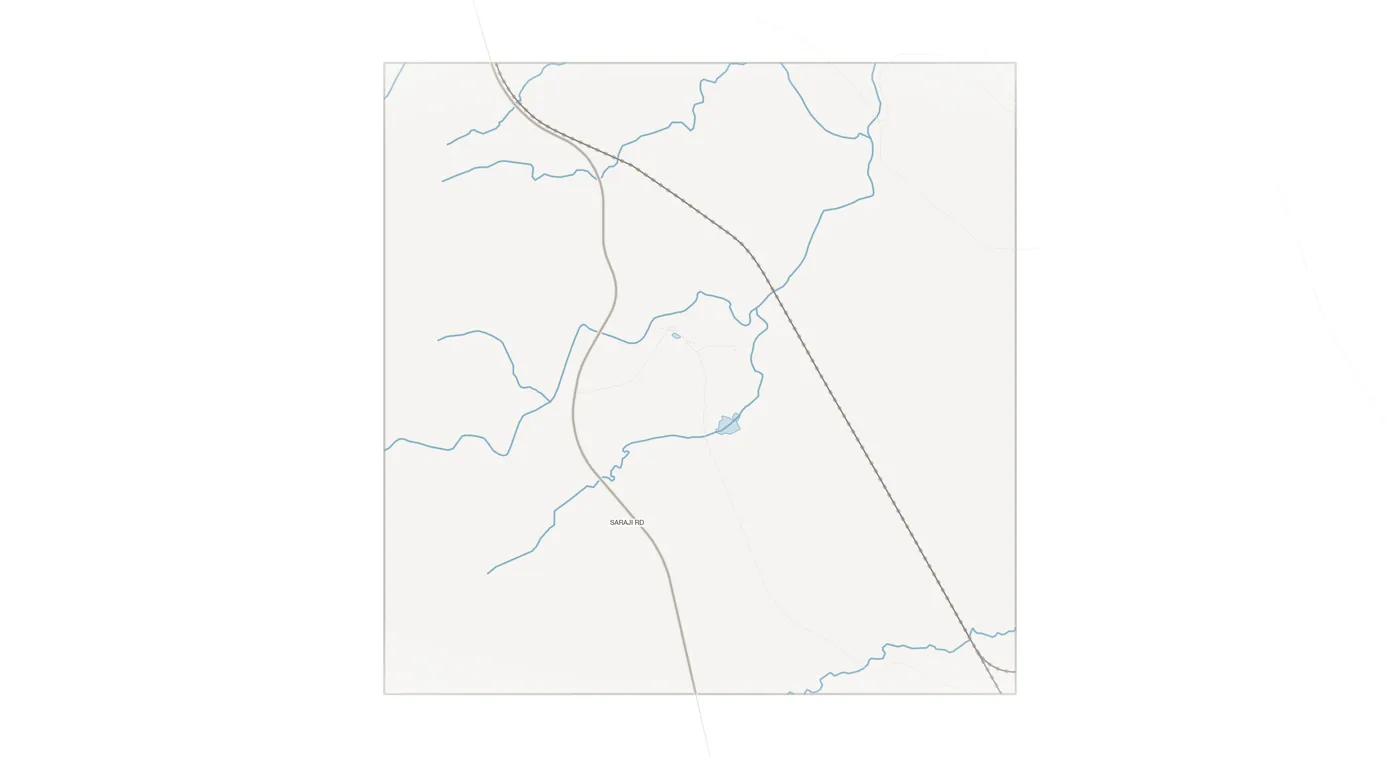
Explore Dysart on the Map
View parcels, zoning overlays, DA applications, schools and more.
Open Interactive Map