Gaythorne
Almost half of Gaythorne's dwellings are apartments, 44.4%, in a suburb covering just 0.93 square kilometres, which explains a density of 3,413 people per km2 and a renter majority at 56.7%. The median age of 33 is 7 years below the national average, pulling toward a young, mobile population: 34.4% moved address in the past five years. University qualifications reach 49.9%, nearly 20 percentage points above the national figure. Household income sits at the 61.8th percentile nationally, above the midpoint but short of the premium tier, making Gaythorne a suburb where educated younger residents live affordably close to Brisbane.
Population
3,158
Median Age
33.0
Household IncomeiMedian weekly household income (ABS Census)
$1,759/wk
DAs (12 months)iDevelopment Applications lodged in the past year
12
Median House
$470K
Estimated from rent (2025)
The estimated median house price is $470,000, derived from rent relativities because direct sales data is limited for this small suburb. Monthly mortgage repayments average $1,842, and the mortgage-to-income ratio sits at 24.2%, below the 30% stress threshold, which is healthier than many comparable inner-Brisbane locations. Separate houses make up only 38.7% of stock, with apartments at 44.4% and semi-detached dwellings at 17.0%, so buyers seeking a freestanding home compete for a minority of listings. Two-bedroom dwellings dominate at 42.0%, followed by three-bedroom at 29.6%, and 4-plus bedroom at 18.9%. Only 16.7% of residents own outright, lower than national norms, reflecting the younger demographic who have had less time to pay down debt.
For Buyers
The estimated median house price is $470,000, derived from rent relativities because direct sales data is limited for this small suburb. Monthly mortgage repayments average $1,842, and the mortgage-to-income ratio sits at 24.2%, below the 30% stress threshold, which is healthier than many comparable inner-Brisbane locations. Separate houses make up only 38.7% of stock, with apartments at 44.4% and semi-detached dwellings at 17.0%, so buyers seeking a freestanding home compete for a minority of listings. Two-bedroom dwellings dominate at 42.0%, followed by three-bedroom at 29.6%, and 4-plus bedroom at 18.9%. Only 16.7% of residents own outright, lower than national norms, reflecting the younger demographic who have had less time to pay down debt.
For Investors
The 56.7% renter share is one of the most significant supply signals in Gaythorne, providing a deep and stable tenant pool compared to most Australian suburbs. Weekly rent of $350 and an estimated median price of $470,000 imply a gross yield near 3.9%, modest but meaningful in the context of a location only 8 kilometres from Brisbane CBD. Vacancy sits at 7.8%, above the standard 3% equilibrium, indicating some softness in demand relative to supply. Development activity shows 13 applications in the past 12 months, including a Material Change of Use for a multiple dwelling, suggesting ongoing densification pressure. The young median age of 33 and high university qualification rate, nearly 20 percentage points above national, support sustained rental demand from professionals and students.
Development Activity
Total DAs
67
Last 12 Months
12
YoY ChangeiYear-over-year change in DA lodgements
-14.3%
Avg DA CostiAverage estimated cost per DA in the past year
N/A
Monthly DA Lodgements
DA Categories
Demographics
The median age of 33 sits 7 years below the national average, the single most defining characteristic of Gaythorne's population. University qualifications at 49.9% run nearly 20 percentage points above national, consistent with the professional occupational mix. Overseas-born residents at 20.9% are close to the national figure, 0.7 percentage points below. Ancestry is Anglo-Celtic leaning, with English (1,248 residents) the top group, followed by Irish (518) and Scottish (369). The average household size of 2.1 is 0.4 below the national average, in keeping with the apartment stock and couples-without-children households, which represent 31.4% of families. The volunteering rate of 16.3% points to a reasonably civic population despite high residential turnover at 34.4%.
Age Distribution
Bedrooms
Dwelling Structure
38.7%
Houses
17.0%
Townhouse
44.4%
Apartment
Tenure
Tenure skews heavily toward renting: 56.7% of residents rent, 26.6% carry a mortgage, and only 16.7% own outright. This renter-majority profile is directly linked to the apartment-heavy stock (44.4%) and the young median age of 33, both factors that reduce outright ownership rates compared to the national average. The estimated median house price is $470,000, well below Brisbane's broader median, reflecting the small and apartment-dominated supply. Two-bedroom dwellings account for 42.0% of stock, the dominant configuration, with three-bedroom at 29.6%. Rent-to-income sits at 19.9%, below the 30% stress threshold, meaning tenants are not under financial pressure relative to their incomes at the 61.8th household income percentile nationally.
Mortgage / mo
$1,842
Rent / wk
$350
HH Size
2.1
Personal Income / wk
$1,033
Vacancy Ratei% of dwellings unoccupied on Census night (ABS 2021)
7.8%
Unoccupied
121
Rent / IncomeiMedian rent as % of household income. Over 30% = housing stress
19.9%
Mortgage / IncomeiMedian mortgage as % of household income. Over 30% = housing stress
24.2%
Community Profile
Languages Spoken at Home
Ancestry
Household Composition
31.4%
Couples, no children
2,246
Total families
Economy & Employment
Healthcare leads the local industry mix at 20.1% (281 workers), followed by Public Administration at 15.8% (221) and Professional/Technical at 13.3% (186). Education contributes 12.4% (173 workers). By occupation, Professionals dominate at 587 workers, managers follow at 238 and clerical/administrative roles at 242. The full-time employment rate is 67.8% and the unemployment rate is 5.1%, slightly above the state average, partly because the young population includes students and recent graduates still entering the workforce. The participation rate of 65.7% is in line with national norms. The household income sitting at the 61.8th percentile nationally reflects the concentration in public sector and healthcare roles rather than higher-income private professional services.
Socio-Economic Indexes (SEIFA)iABS index ranking suburbs from 1 (most disadvantaged) to 10 (most advantaged)
Full-time
67.8%
Part-time
27.1%
Participation
65.7%
Employed
1,643
Occupations
Top Industries
University
49.9%
Postgraduate
11.8%
Born Overseas
20.9%
Dwellings
1,427
Transport to Work
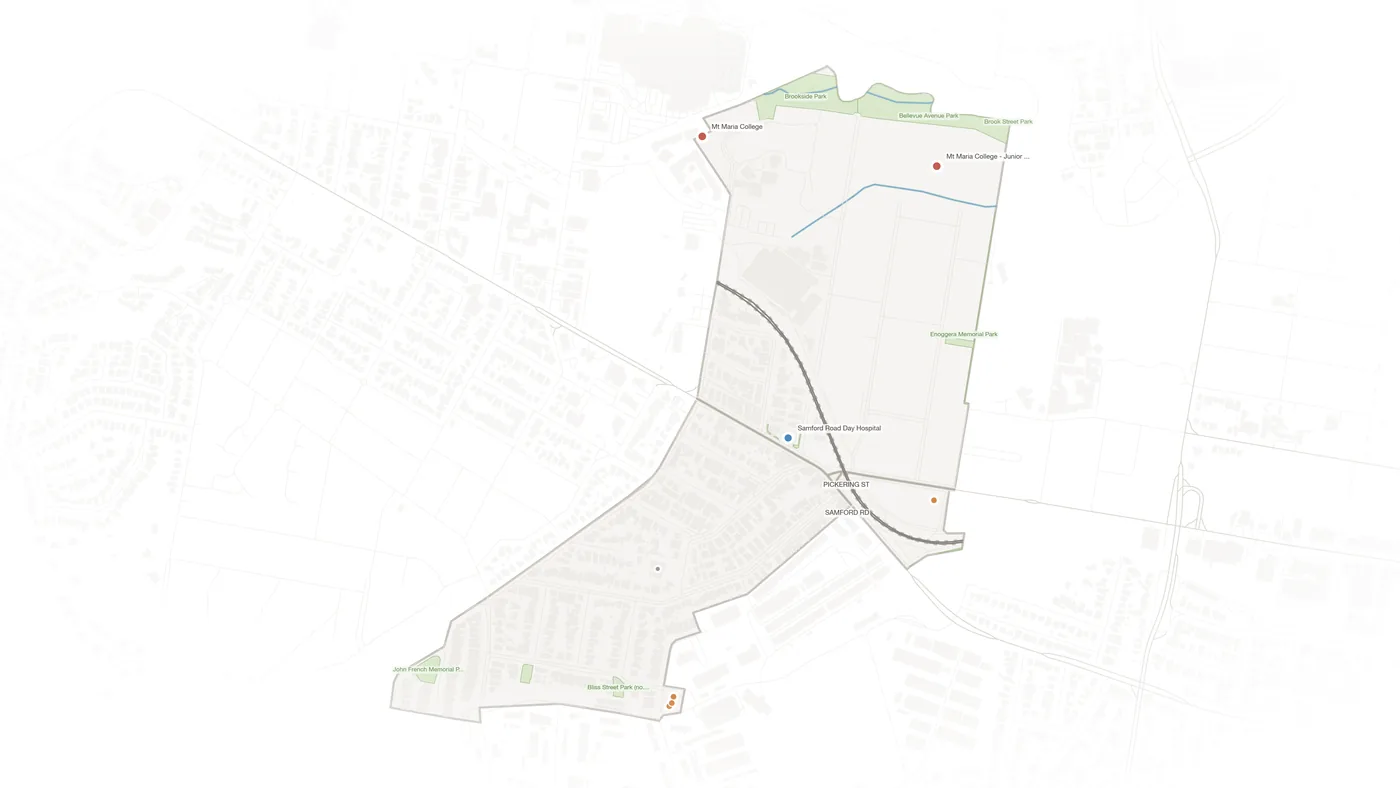
Public transport use at 15.3% and walking or cycling at 5.6% together put nearly 21% of residents using non-car transport, notable for a QLD suburb where car dependence is typically above national averages. Car use at 75.4% remains the dominant mode. No schools are recorded within the Gaythorne boundary, so families rely on institutions in neighbouring suburbs. Crime data is not available in this dataset. The rent-to-income ratio of 19.9% and mortgage-to-income of 24.2% both fall below the 30% stress threshold, indicating financial stability across tenure types. With 4.4% of residents needing daily assistance (132 people), the welfare burden is low relative to the population size of 3,158.
Drive
75.4%
Public Transport
15.3%
Walk / Cycle
5.6%
Work from Home
N/A
National Ranking iPercentile rank among ~15,000 AU suburbs. 90% = higher than 90% of suburbs
How Gaythorne compares to ~15,000 Australian suburbs
Frequently Asked Questions
Is Gaythorne a good suburb to live in?
Gaythorne suits young professionals and students well. The median age is 33, about 7 years below the national average, university qualifications reach 49.9% (nearly 20 points above national), and household income sits at the 61.8th percentile nationally. Rent-to-income of 19.9% and mortgage-to-income of 24.2% are both below the 30% stress threshold, making it financially accessible.
What is the median house price in Gaythorne?
The estimated median house price is $470,000, derived from rent relativities as of 2025. Weekly rent averages $350 and monthly mortgage repayments average $1,842. With 56.7% of residents renting and only 38.7% of stock being separate houses, true freestanding house prices are limited by tight supply.
What schools are in Gaythorne?
No schools are recorded within the Gaythorne boundary in this dataset. Families rely on schools in neighbouring suburbs. Despite this, the suburb has a highly educated population, with 49.9% holding university qualifications, nearly 20 percentage points above the national figure.
Is Gaythorne safe?
Detailed crime statistics are not available for Gaythorne in this dataset. As indirect indicators, only 4.4% of the 3,158 residents (132 people) need daily assistance, and housing stress is low with rent-to-income at 19.9% and mortgage-to-income at 24.2%, both below the 30% threshold associated with financial stress and related social issues.
Is Gaythorne good for property investment?
The 56.7% renter share is above the national average and provides a large tenant pool. Weekly rent of $350 against an estimated median of $470,000 implies a gross yield near 3.9%. Vacancy at 7.8% is above the 3% equilibrium, signalling some oversupply. Recent development applications including a multiple dwelling MCU indicate ongoing densification, which can compress yields but supports capital growth over time.
How is Gaythorne's population changing?
Formal forecasts are not available in this dataset. The residential turnover rate of 34.4% means a third of residents moved in the past 5 years, reflecting a mobile, young population with a median age of 33. The 0.93 km2 footprint limits expansion, so growth comes through densification, with 13 development applications lodged in the past 12 months including a multiple dwelling change of use.
How to read these comparisons
Phrases like "above the national average" reference the unweighted median across Australian suburbs with more than 1,000 residents, not population-weighted national figures. Suburb-level medians are more useful for ranking suburbs against each other; ABS census headlines are population-weighted (so dominated by Sydney and Melbourne) and can read very differently.
Current baseline (refreshed 2026-05-10): median age 40, university-educated 30.1%, born overseas 21.6%, average household size 2.5 people.
Data sources: ABS 2021 Census (demographics, income, tenure), state Valuer-General (house prices), Department of Jobs SALM (unemployment), ACARA (school ICSEA), state Crime Statistics agencies (offences), council DA portals (development applications). Population forecasts use a Hamilton-Perry cohort model calibrated to ABS ERP.
Explore Gaythorne on the Map
View parcels, zoning overlays, DA applications, schools and more.
Open Interactive Map