Murray
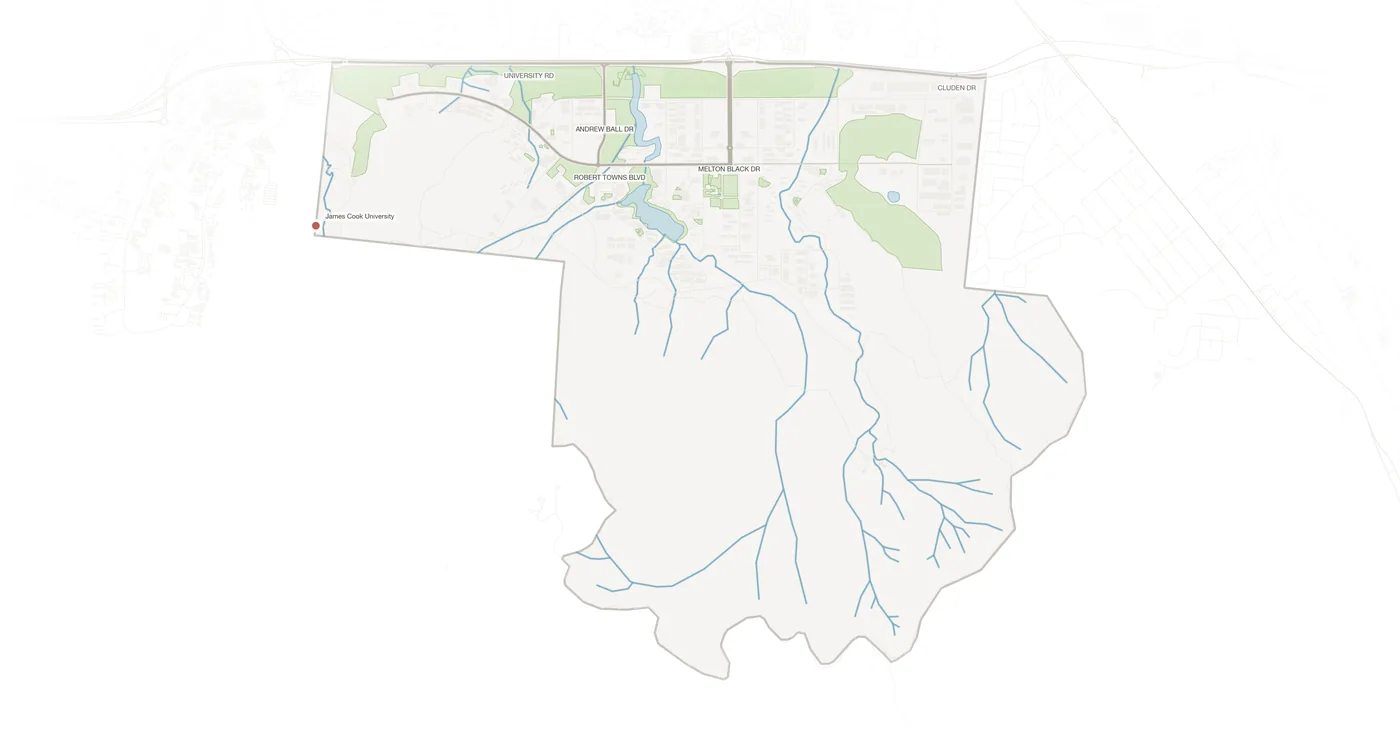
A median age of 22 and an 85.9% male population set Murray apart from virtually every other suburb in Queensland. The area's 1,739 residents are overwhelmingly employed in Public Administration (97.1% of local workers), all live in rented dwellings, and household income sits at the 33.1st percentile nationally despite a 95.2% full-time employment rate. All four SEIFA indexes place Murray in decile 1, the most disadvantaged tier nationally, yet rent-to-income at just 8.1% indicates housing costs are extremely low relative to earnings. This combination points to a population concentrated in a structured institutional setting rather than a conventional residential community.
Population
1,739
Median Age
22.0
Household IncomeiMedian weekly household income (ABS Census)
$1,325/wk
DAs (12 months)iDevelopment Applications lodged in the past year
0
Median House
$132K
Estimated from rent (2025)
Murray has no recorded owner-occupiers: 100% of dwellings are rented, and no mortgage data exists because there are no mortgaged households. The estimated median house price is $132,000, derived from rent data rather than sales transactions, which is far below Queensland state medians. Weekly rent of $107 is extremely low compared to the national average, reflecting subsidised or institutional housing rather than a private market. Separate houses account for 100% of dwelling stock, and the 0-1 bedroom category represents the entire recorded dwelling mix. Prospective private buyers should note that the absence of a functioning sales market means price discovery is highly uncertain and conventional homebuyer metrics do not apply here.
For Buyers
Murray has no recorded owner-occupiers: 100% of dwellings are rented, and no mortgage data exists because there are no mortgaged households. The estimated median house price is $132,000, derived from rent data rather than sales transactions, which is far below Queensland state medians. Weekly rent of $107 is extremely low compared to the national average, reflecting subsidised or institutional housing rather than a private market. Separate houses account for 100% of dwelling stock, and the 0-1 bedroom category represents the entire recorded dwelling mix. Prospective private buyers should note that the absence of a functioning sales market means price discovery is highly uncertain and conventional homebuyer metrics do not apply here.
For Investors
The investor case for Murray is highly constrained. All 1,739 residents rent, giving a 100% renter share, but weekly rent of $107 and an estimated median house price of $132,000 imply a gross yield that is difficult to realise through private tenancy given the institutional housing context. No vacancy rate data is available, and development activity recorded zero applications in the past 12 months. Population growth trends show overseas migration as the primary driver at +227 per year for the broader area, with internal migration adding +70 annually. The gentrification score of 24-25 registers early signs, though this is driven by population inflows rather than capital uplift in a conventional residential sense.
Demographics
Murray's demographic profile is highly atypical. The median age of 22 is 18 years below the national figure, and 85.9% of residents are male, compared to a near-even national split. University qualifications reach just 4.1%, which is 26 percentage points below the national average, and only 10.8% were born overseas, against a national figure around 21.6 points higher. Average household size is 1.0 person, compared to the national average of 2.5, because all households are single-occupant. Ancestry data shows 1,020 residents recorded as ancestry not stated, followed by English (310), Irish (97) and Scottish (89). The population turned over at 59.6% between Census periods, indicating high transience consistent with a non-permanent residential arrangement.
Age Distribution
Dwelling Structure
100.0%
Houses
N/A
Townhouse
N/A
Apartment
Tenure
Every dwelling in Murray is rented, and the 0-1 bedroom category accounts for 100% of recorded stock. This is consistent with single-occupant institutional accommodation rather than family housing. The estimated median house price of $132,000 is based on rent capitalisation rather than recorded sales, placing it well below the Queensland median. Weekly rent of $107 compares to state and national averages many times higher, because costs are not set by a private market. Mortgage repayment data is absent because no mortgaged households exist. The rent-to-income ratio of 8.1% is among the lowest recorded anywhere, yet SEIFA scores sit at decile 1 across all four indexes, reflecting low income levels rather than housing affordability improvement.
Mortgage / mo
$0
Rent / wk
$107
HH Size
1.0
Personal Income / wk
$1,302
Vacancy Ratei% of dwellings unoccupied on Census night (ABS 2021)
0.0%
Rent / IncomeiMedian rent as % of household income. Over 30% = housing stress
8.1%
Community Profile
Ancestry
Economy & Employment
Public Administration dominates Murray's economy at 97.1% of employed workers (266 people), with only 5 in Hospitality and 3 in Healthcare. By occupation, Community and Personal Services accounts for 431 workers, far above Machinery and Drivers (109), Managers (46) and Professionals (21). The full-time employment rate of 95.2% is exceptionally high, and recorded unemployment is zero, because the population is institutionally employed rather than participating in an open labour market. The participation rate of 39.2% is below national averages because a large share of residents are not classified as being in the labour force. Real income grew 8.2% over the decade. All four SEIFA deciles register at 1, the lowest nationally, reflecting low personal and household income levels.
Unemployment
6.4%
Labour Force
9,028
Unemployed
579
Quarterly Trend
Source: SALM Dec-25
Socio-Economic Indexes (SEIFA)iABS index ranking suburbs from 1 (most disadvantaged) to 10 (most advantaged)
Full-time
95.2%
Part-time
4.8%
Participation
39.2%
Employed
682
Occupations
Top Industries
University
4.1%
Postgraduate
0.5%
Born Overseas
10.8%
Dwellings
3
Transport to Work
Active transport is unusually prominent: 39.1% of residents walked or cycled to work, far above national norms, while 55.7% drove. No public transport usage is recorded. No schools are listed within Murray, and crime statistics are not available for this suburb. The IRSAD decile of 1 places Murray in the most disadvantaged tier nationally across relative socio-economic advantage and disadvantage. Volunteering reaches 8.8% of residents, and zero residents are recorded as needing daily assistance. The combination of zero crime data, zero school data, and a 100% institutionally rented population with single-person households means conventional livability metrics are largely inapplicable here.
Drive
55.7%
Public Transport
N/A
Walk / Cycle
39.1%
Work from Home
N/A
Population Forecast
+1.15%/yr
(+230 people/yr)
EstablishedMurray's broader SA2 area recorded a population of 19,938 in 2025, up 9.2% over 10 years, with annual growth of 1.15% adding roughly 230 persons per year above the 2025 base. Overseas migration is the primary driver at +227 net arrivals annually, with internal migration contributing +70 per year. Medium forecasts project the population reaching 21,346 by 2031. Rent growth of 29.7% over the period outpaced real income growth of 8.2%, widening affordability pressure on a relative basis, though rent-to-income at 8.1% remains lower than the national stress threshold. The gentrification score of 24 places the area at early signs, supported by the population growth signal of +17% since 2011 and the sustained overseas inflow.
Historical + Forecast
Hamilton-Perry + Holt smoothing on ERP 2001-2025
Age Cohort Forecast
Primary Driver
Overseas Migration
Net Overseas / yr
+227
Net Internal / yr
+70
Gentrification Signal
Early signs
Population +17% since 2011, Net internal migration +70/yr, Strong overseas inflow +227/yr
National Ranking iPercentile rank among ~15,000 AU suburbs. 90% = higher than 90% of suburbs
How Murray compares to ~15,000 Australian suburbs
Frequently Asked Questions
Is Murray a good suburb to live in?
Murray has a highly atypical profile: 100% of dwellings are rented, median age is 22 (18 years below national), and 85.9% of residents are male. All four SEIFA indexes place it at decile 1, the most disadvantaged tier nationally. Rent-to-income is just 8.1%, but this reflects institutional rather than private housing conditions.
What is the median house price in Murray?
The median house price is estimated at $132,000, derived from rent capitalisation rather than recorded sales transactions because there is no private ownership market. Weekly rent averages $107. No mortgage repayment data exists as there are no mortgaged households recorded.
What schools are in Murray?
No schools are recorded within the Murray suburb boundary. With a median age of 22 and average household size of 1.0 person, the population consists almost entirely of single working-age adults, resulting in minimal demand for primary or secondary schooling within the suburb itself.
Is Murray safe?
Crime statistics are not available for Murray in this dataset. As a contextual indicator, Murray scores decile 1 on the IRSD index of relative disadvantage, the lowest tier nationally. Zero residents require daily assistance. The suburb's institutional character means standard residential safety comparisons are not directly applicable.
Is Murray good for property investment?
Murray presents significant constraints for conventional property investment. There is no recorded private ownership market, weekly rent of $107 is extremely low relative to any purchase price, and no development applications were lodged in the past 12 months. Population in the broader area grows at 1.15% per year, but the housing stock does not operate on standard market terms.
How is Murray's population changing?
The broader area's population reached 19,938 in 2025, a 9.2% increase over 10 years, growing at 1.15% annually. Overseas migration is the primary driver at +227 net arrivals per year, with internal migration adding +70 per year. Medium forecasts project the population reaching 21,346 by 2031.
How to read these comparisons
Phrases like "above the national average" reference the unweighted median across Australian suburbs with more than 1,000 residents, not population-weighted national figures. Suburb-level medians are more useful for ranking suburbs against each other; ABS census headlines are population-weighted (so dominated by Sydney and Melbourne) and can read very differently.
Current baseline (refreshed 2026-05-10): median age 40, university-educated 30.1%, born overseas 21.6%, average household size 2.5 people.
Data sources: ABS 2021 Census (demographics, income, tenure), state Valuer-General (house prices), Department of Jobs SALM (unemployment), ACARA (school ICSEA), state Crime Statistics agencies (offences), council DA portals (development applications). Population forecasts use a Hamilton-Perry cohort model calibrated to ABS ERP.
Explore Murray on the Map
View parcels, zoning overlays, DA applications, schools and more.
Open Interactive Map