Woodhill
A household income at the 92.4th percentile nationally stands out in a suburb where the median house price is estimated at $541,000, making Woodhill one of the more financially comfortable rural-fringe communities in Queensland. The population of 1,231 residents is young, with a median age of 31, which is 9 years below the national figure. The suburb is almost entirely detached houses (99.1%), with 4-plus bedroom dwellings accounting for 77.7% of stock, a proportion well above state and national averages. Construction employs 21.4% of the local workforce, more than double its national share, reflecting the area's tradesperson character.
Population
1,231
Median Age
31.0
Household IncomeiMedian weekly household income (ABS Census)
$2,505/wk
DAs (12 months)iDevelopment Applications lodged in the past year
120
Median House
$541K
Estimated from rent (2025)
The estimated median house price of $541,000 positions Woodhill as affordable compared to Brisbane metro, and the mortgage-to-income ratio of 20.0% sits below the 30% stress threshold, meaning typical buyers here carry manageable debt relative to household income. Weekly rent of $395 and monthly mortgage repayments averaging $2,167 reflect the rural-fringe pricing. The stock is almost exclusively detached houses at 99.1%, with 77.7% of dwellings having 4 or more bedrooms, suited to families rather than singles or downsizers. The ownership structure leans heavily toward mortgaged households at 74.6%, compared to just 16.3% who own outright, indicating a predominantly younger buyer base consistent with the 31-year median age.
For Buyers
The estimated median house price of $541,000 positions Woodhill as affordable compared to Brisbane metro, and the mortgage-to-income ratio of 20.0% sits below the 30% stress threshold, meaning typical buyers here carry manageable debt relative to household income. Weekly rent of $395 and monthly mortgage repayments averaging $2,167 reflect the rural-fringe pricing. The stock is almost exclusively detached houses at 99.1%, with 77.7% of dwellings having 4 or more bedrooms, suited to families rather than singles or downsizers. The ownership structure leans heavily toward mortgaged households at 74.6%, compared to just 16.3% who own outright, indicating a predominantly younger buyer base consistent with the 31-year median age.
For Investors
Woodhill's rental market is thin, with only 9.2% of dwellings rented, well below the national average, suggesting limited demand from tenants and few investment properties changing hands. Weekly rent is $395, and the vacancy rate of 4.2% is elevated, meaning landlords face real competition to secure tenants. Against the $541,000 estimated median, that rent implies a gross yield near 3.8%. Development activity is high at 104 applications over 12 months, dominated by residential building work including new houses, garages and pools, consistent with an area in active residential expansion. The low rental share and high vacancy rate together suggest owner-occupier demand drives the market more than investor activity.
Development Activity
Total DAs
173
Last 12 Months
120
YoY ChangeiYear-over-year change in DA lodgements
+990.9%
Avg DA CostiAverage estimated cost per DA in the past year
N/A
Monthly DA Lodgements
DA Categories
Schools in Woodhill iICSEA: school advantage index. 1000 = national avg, higher = more advantaged
Woodhill State School
Prep-6 · 166 students
Demographics
Woodhill's median age of 31 is 9 years younger than the national figure, placing it among Queensland's youngest rural communities. Overseas-born residents make up 15.7% of the population, which is 5.9 percentage points below the national rate, reflecting a strongly Anglo-Celtic ancestry profile led by English (525 residents), Scottish (118) and German (102). Average household size of 3.4 is 0.9 above the national average, consistent with the family-oriented dwelling stock. Couples with children make up 616 of 1,108 total families (55.6%), reinforcing the family demographic. University qualifications at 16.9% run 13.2 percentage points below the national figure, which aligns with the construction and trades-heavy employment base.
Age Distribution
Bedrooms
Dwelling Structure
99.1%
Houses
N/A
Townhouse
0.9%
Apartment
Tenure
Almost all dwellings in Woodhill are separate houses (99.1%), with apartments accounting for under 1%, a ratio that is far higher than state and national norms. The dominant bedroom configuration is 4-plus at 77.7%, followed by 3 bedrooms at 17.0% and 2 bedrooms at just 4.1%, making this suburb less suited to smaller households than most Queensland markets. Mortgage holders account for 74.6% of residents, compared to 16.3% who own outright, a split that reflects the young buyer profile. Monthly mortgage repayments average $2,167, and rent-to-income sits at 15.8%, both below stress thresholds and lower than national medians. The vacancy rate of 4.2% is above typical owner-occupier norms, suggesting some properties sit empty between occupants.
Mortgage / mo
$2,167
Rent / wk
$395
HH Size
3.4
Personal Income / wk
$946
Vacancy Ratei% of dwellings unoccupied on Census night (ABS 2021)
4.2%
Unoccupied
15
Rent / IncomeiMedian rent as % of household income. Over 30% = housing stress
15.8%
Mortgage / IncomeiMedian mortgage as % of household income. Over 30% = housing stress
20.0%
Community Profile
Ancestry
Household Composition
20.8%
Couples, no children
1,108
Total families
Economy & Employment
Construction dominates Woodhill's economy at 21.4% of employed residents, more than double the national share for the sector. Healthcare (13.5%) and Education (12.2%) follow, with Public Administration (9.2%) and Retail (7.3%) rounding out the top five. By occupation, Professionals (87) and Clerical/Admin workers (85) lead, but Labourers (76) and Community/Personal service workers (74) are close behind, reflecting a mixed blue-collar and services workforce. The unemployment rate of 2.8% is low, and the full-time employment rate of 74.6% is above average. Labour force participation at 63.8% is moderate, with 212 residents not in the labour force, partly explained by the family-formation age profile.
Socio-Economic Indexes (SEIFA)iABS index ranking suburbs from 1 (most disadvantaged) to 10 (most advantaged)
Full-time
74.6%
Part-time
22.6%
Participation
63.8%
Employed
560
Occupations
Top Industries
University
16.9%
Postgraduate
3.7%
Born Overseas
15.7%
Dwellings
344
Transport to Work
Car dependence is almost universal in Woodhill, with 92.7% of residents driving to work and no public transport data recorded, consistent with a rural-fringe location. Walking and cycling account for just 2.1% of commutes. Schools within the Woodhill boundary are not recorded in this dataset, so families rely on facilities in surrounding areas. Housing stress is low: rent-to-income at 15.8% and mortgage-to-income at 20.0% are both below national stress benchmarks. The need-assistance rate of 5.2% (61 residents) is moderate and the volunteering rate of 9.8% reflects some community engagement. Crime data is not available for this suburb, but the low-unemployment, high-income profile (household income in the 92.4th national percentile) is broadly consistent with low-disadvantage outcomes.
Drive
92.7%
Public Transport
N/A
Walk / Cycle
2.1%
Work from Home
N/A
National Ranking iPercentile rank among ~15,000 AU suburbs. 90% = higher than 90% of suburbs
How Woodhill compares to ~15,000 Australian suburbs
Frequently Asked Questions
Is Woodhill a good suburb to live in?
Woodhill suits families looking for space and affordability. Household income sits at the 92.4th national percentile, the mortgage-to-income ratio is 20.0% (below the 30% stress threshold), and 99.1% of dwellings are detached houses with an average size of 4-plus bedrooms. Car dependence is high at 92.7% and the area lacks recorded public transport.
What is the median house price in Woodhill?
The median house price is estimated at $541,000 (2025 estimate derived from rental data). Weekly rent averages $395, and monthly mortgage repayments run approximately $2,167, giving a mortgage-to-income ratio of 20.0%, which is below the national stress threshold of 30%.
What schools are in Woodhill?
No schools are recorded within the Woodhill suburb boundary in this dataset. Families rely on schools in neighbouring communities. University qualification rates locally are 16.9%, which is 13.2 percentage points below the national figure, consistent with a trades and services employment base.
Is Woodhill safe?
Crime statistics are not available for Woodhill in this dataset. As an indirect indicator, household income sits at the 92.4th national percentile and unemployment is just 2.8%, both well below typical disadvantage markers. The need-assistance rate of 5.2% (61 residents) is moderate.
Is Woodhill good for property investment?
The rental market is limited, with only 9.2% of dwellings rented compared to the national average, and the vacancy rate of 4.2% is above typical norms. Against a $541,000 estimated median, weekly rent of $395 implies a gross yield near 3.8%. The 104 development applications in 12 months suggest active residential construction.
How is Woodhill's population changing?
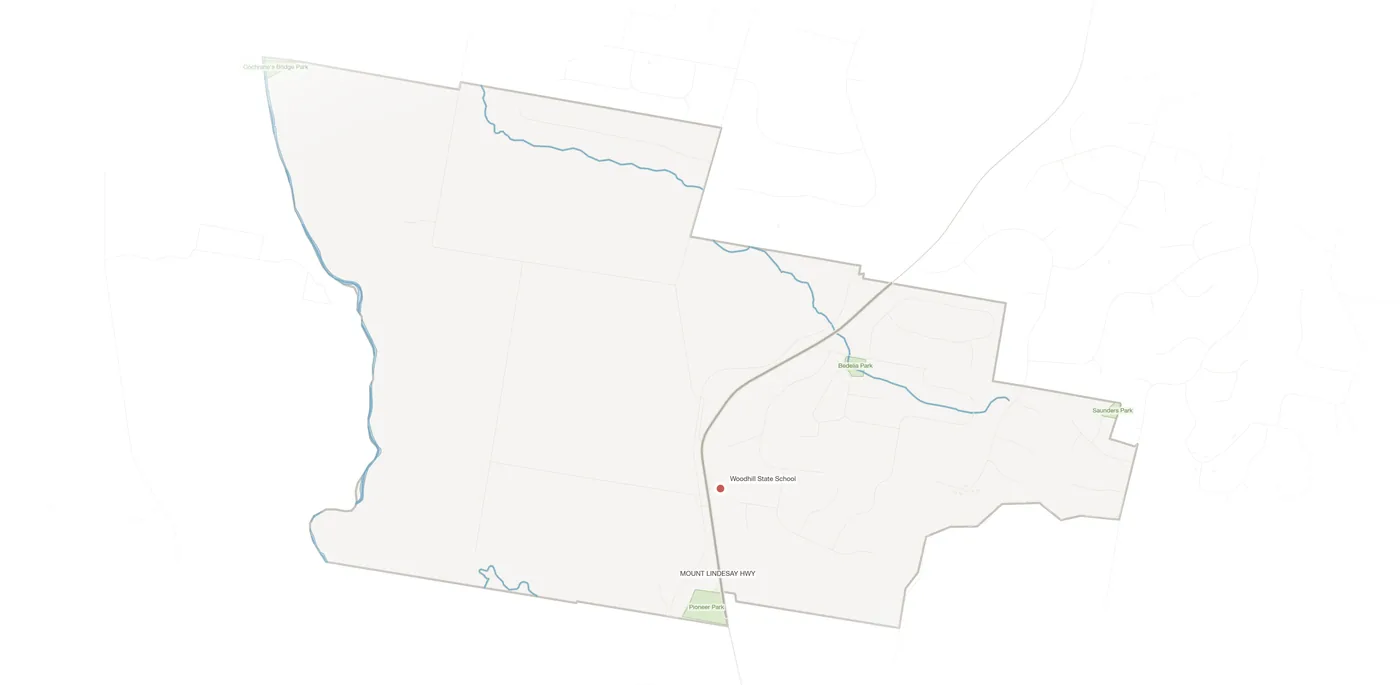
Woodhill has 1,231 residents across 12.88 square kilometres. Resident stability is high with 79.9% staying at the same address over the measured period. The young median age of 31 (9 years below national) and average household size of 3.4 (0.9 above national) point to ongoing family-formation growth.
How much development is happening in Woodhill?
There were 104 development applications lodged in the past 12 months, high relative to a population of 1,231. Recent applications include new houses, pools, garages and sheds, consistent with active residential infill rather than large subdivision. This pace suggests steady demand for new and upgraded housing in the area.
How to read these comparisons
Phrases like "above the national average" reference the unweighted median across Australian suburbs with more than 1,000 residents, not population-weighted national figures. Suburb-level medians are more useful for ranking suburbs against each other; ABS census headlines are population-weighted (so dominated by Sydney and Melbourne) and can read very differently.
Current baseline (refreshed 2026-05-10): median age 40, university-educated 30.1%, born overseas 21.6%, average household size 2.5 people.
Data sources: ABS 2021 Census (demographics, income, tenure), state Valuer-General (house prices), Department of Jobs SALM (unemployment), ACARA (school ICSEA), state Crime Statistics agencies (offences), council DA portals (development applications). Population forecasts use a Hamilton-Perry cohort model calibrated to ABS ERP.
Explore Woodhill on the Map
View parcels, zoning overlays, DA applications, schools and more.
Open Interactive Map