
Granny flats and secondary dwellings are growing across Australia, but the visible DA pipeline is not the whole story. The biggest mistake is reading one state's DA volume as if it were the national market.
The Core Reason the Data Looks Uneven
Different states push secondary dwellings through very different approval paths.
The same kind of project can be:
- highly visible in one state's planning data
- only partly visible in another
- almost invisible in places where it stays in a faster or lighter approval path
So the trend is real, but the DA count is an imperfect proxy.
Why Demand Keeps Rising
The national demand drivers are straightforward:
- households want extra accommodation without buying a second property
- families want room for older parents or adult children
- owners want an additional income stream on land they already hold
- governments want more housing in existing suburbs without relying only on greenfield growth
None of that is slowing down. If anything, the policy tailwind is getting stronger.
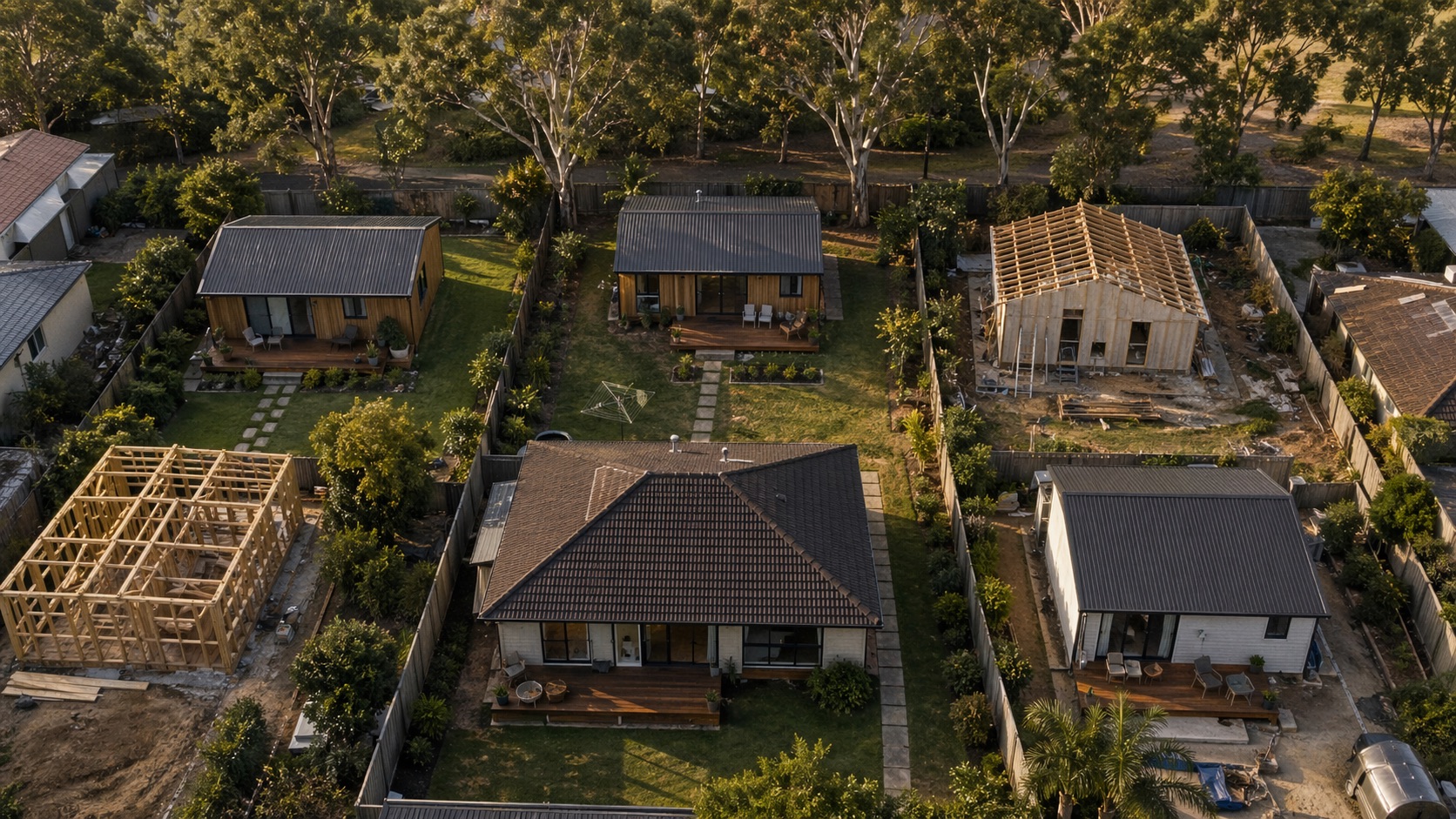
A typical 60 sqm granny flat tucked behind an existing home: timber cladding, pitched roof, small deck. This is the kind of project driving secondary dwelling growth across Australia.
State Rules Shape What You Can See
| State | Primary approval path for small granny flats | DA visibility |
|---|---|---|
| VIC | No planning permit if <= 60 m² on standard lots (since Dec 2023) | High for complex sites; dropping for simple builds |
| NSW | Complying Development Certificate (CDC) for <= 60 m² on lots >= 450 m² | Low: most go through CDC, skip DA entirely |
| QLD | Code assessment in many councils | Moderate: depends heavily on council |
| WA | Exempt on lots >= 450 m² in residential zones (since 2024) | Low |
| SA | Varies by council; ancillary accommodation rules loosening | Low to moderate |
Victoria
Victoria gives the clearest planning-data signal. Most small second dwelling projects still show up in the visible planning framework, especially where overlays or smaller lots are involved.
But that is changing. Victoria's reforms since late 2023 made many small second homes easier to build without a full planning permit. The result: the DA count still shows the harder projects, but the easy ones are increasingly invisible.
NSW
NSW runs the most permissive pathway. Under the Housing Code, a complying secondary dwelling up to 60 m² can go straight through without a DA. That means a large chunk of the real granny-flat market never touches the planning system. Read the full NSW rules for the current size and setback thresholds.
Queensland
Queensland often pushes secondary dwellings through code assessment or other less visible paths, depending on the council. The public DA signal is incomplete here. We do not have reliable national data on how many code-assessed granny flats are built each year, and neither does anyone else.
WA and SA
WA expanded granny-flat exemptions in 2024, removing the need for planning approval on lots over 450 m² in most residential zones. SA is behind on reform but has been loosening ancillary accommodation rules in selected councils. In both states, the easier projects stay off the DA radar entirely.
What This Means for Tradies and Builders
For trade leads, the useful conclusion is:
- DA data is best at surfacing the higher-friction granny-flat jobs
- the full market is larger than the visible permit stream
- builders who rely only on public DA data will miss simpler backyard or code-path projects
The best operators combine DA visibility with direct local marketing. Relying on one channel alone leaves money on the table.
The Better Way to Read the Market
Instead of asking "Which state has the most granny-flat DAs?", ask:
- Which states make these projects easy enough to multiply?
- Which states still push more of them through visible approval channels?
- Which projects in the visible DA stream are the higher-value or more complex jobs?
Those questions are much more useful than taking raw counts at face value.
The Bottom Line
Granny flats and secondary dwellings are not a niche anymore. But the visible DA pipeline undercounts the real market, especially in states where code or permit-lite pathways are doing more of the work.
If you want the visible higher-friction jobs, browse granny flat and secondary dwelling leads. For the state-by-state rules: Victoria, NSW, Queensland.
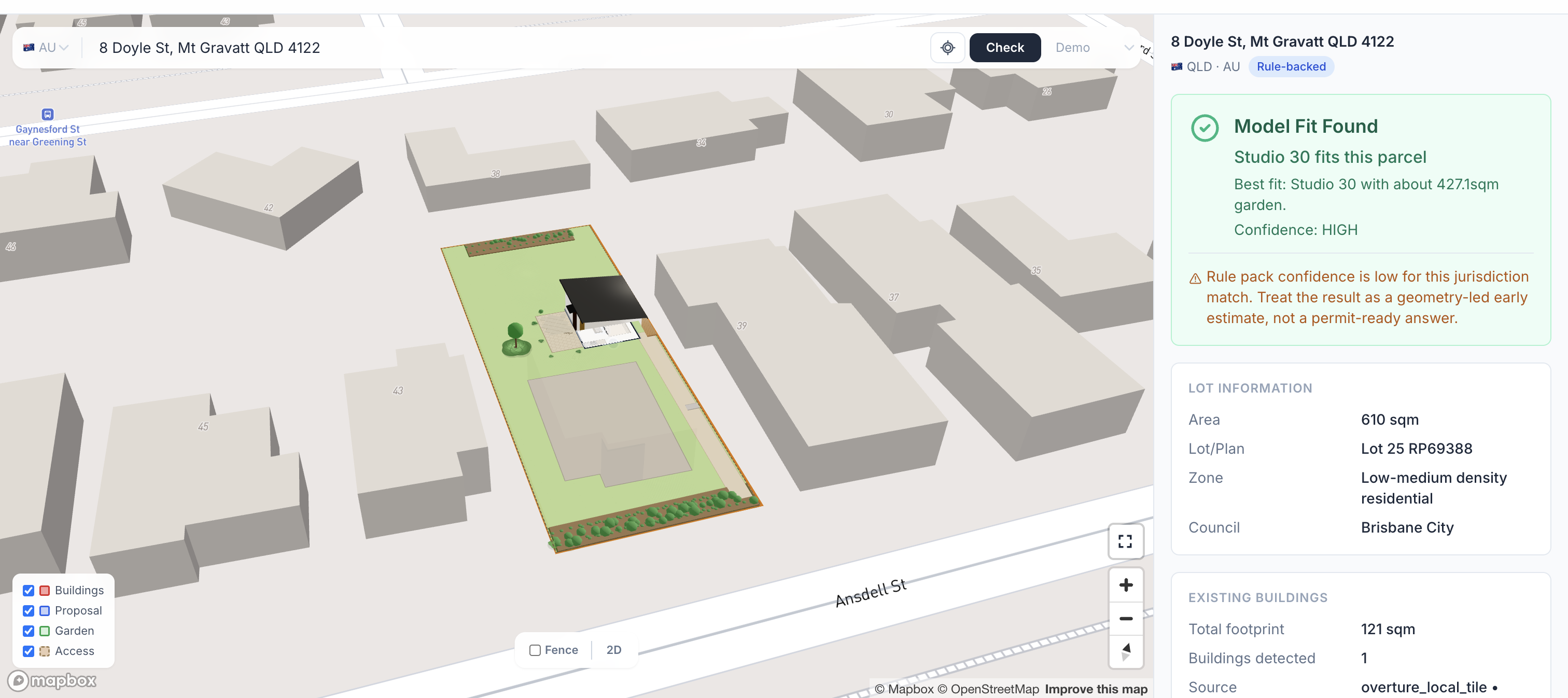
The Granny Flat Feasibility Checker analyses any Australian address. Shows parcel boundary, existing buildings, proposed placement with garden plan.


