Solutions // Energy Site Screening
A planning and environment screening memo for BESS, solar, wind and gas peaker candidates anywhere in Australia. 19 constraints checked against public spatial data, with statutory references and satellite exhibits per constraint. The filter you run before spending real money on consultants, not a substitute for them.
The Evidence
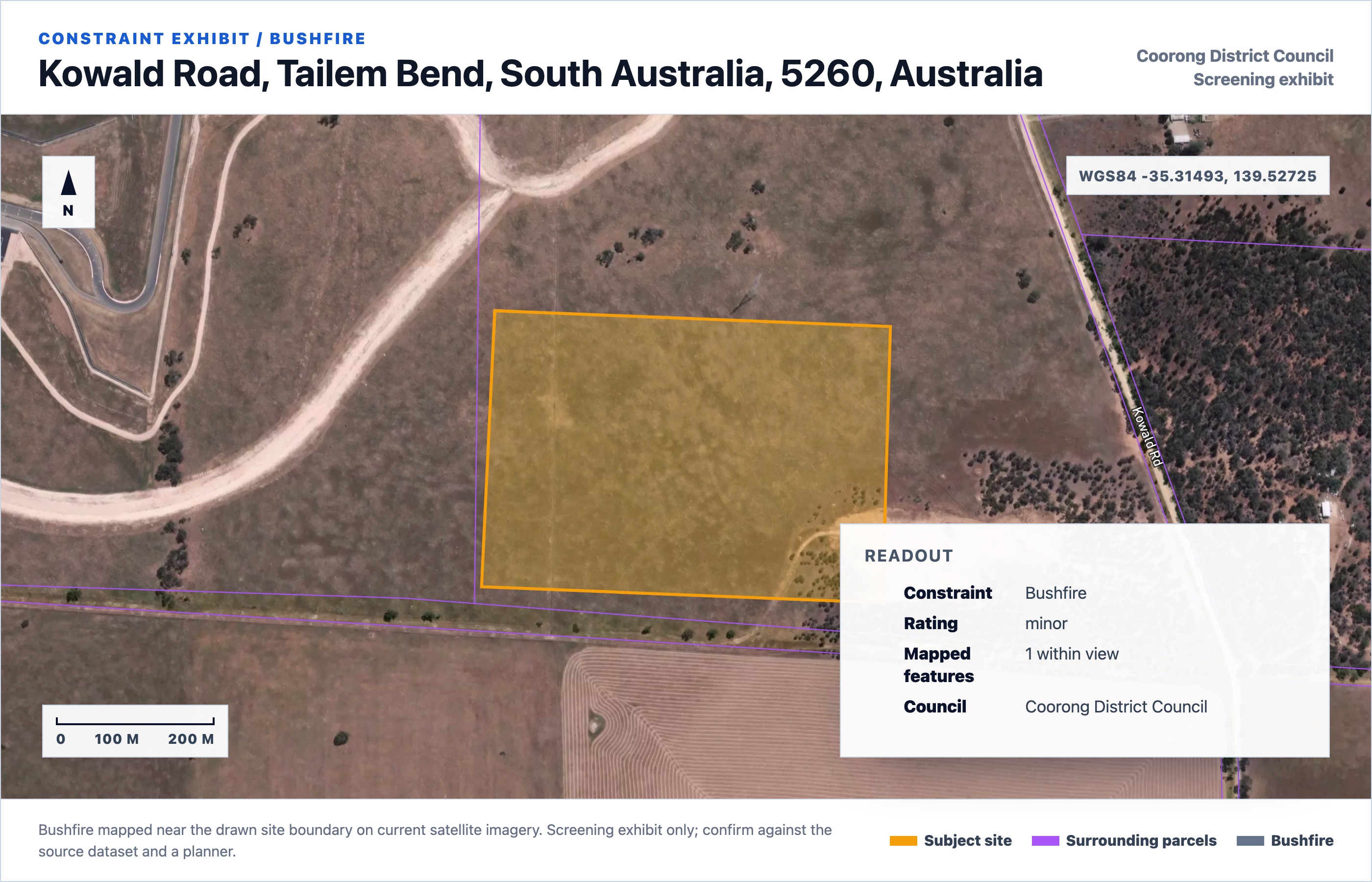
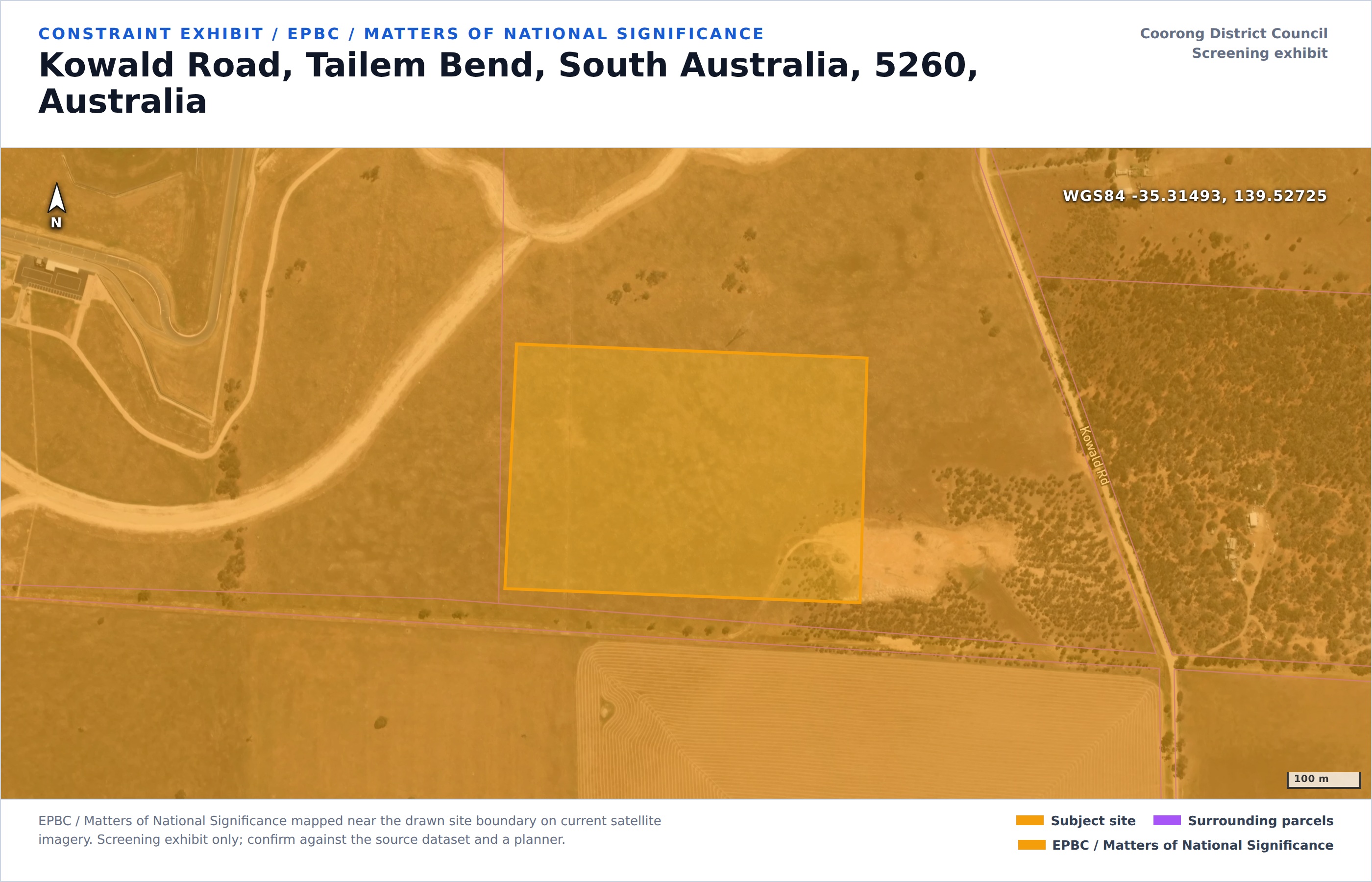
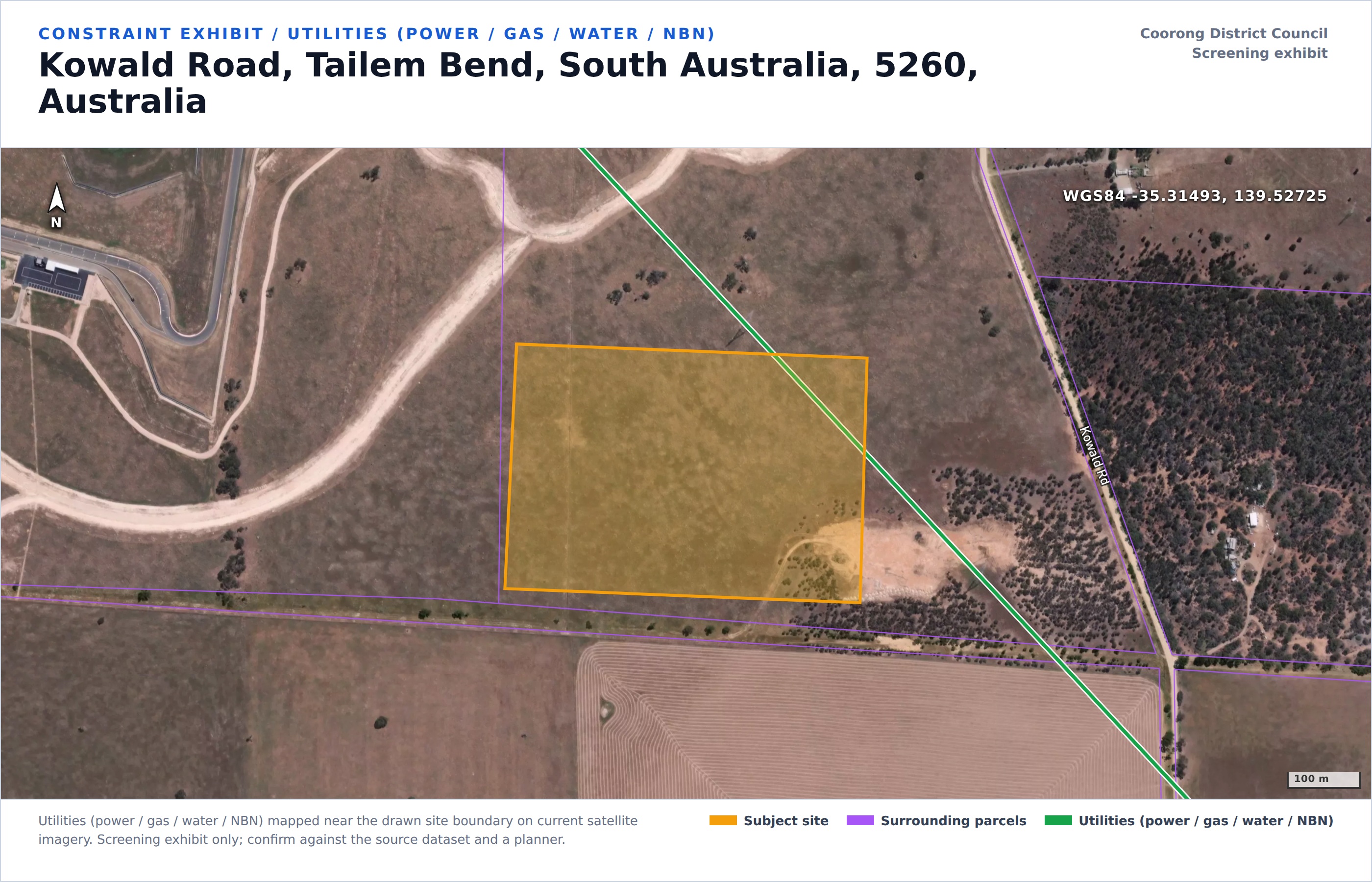
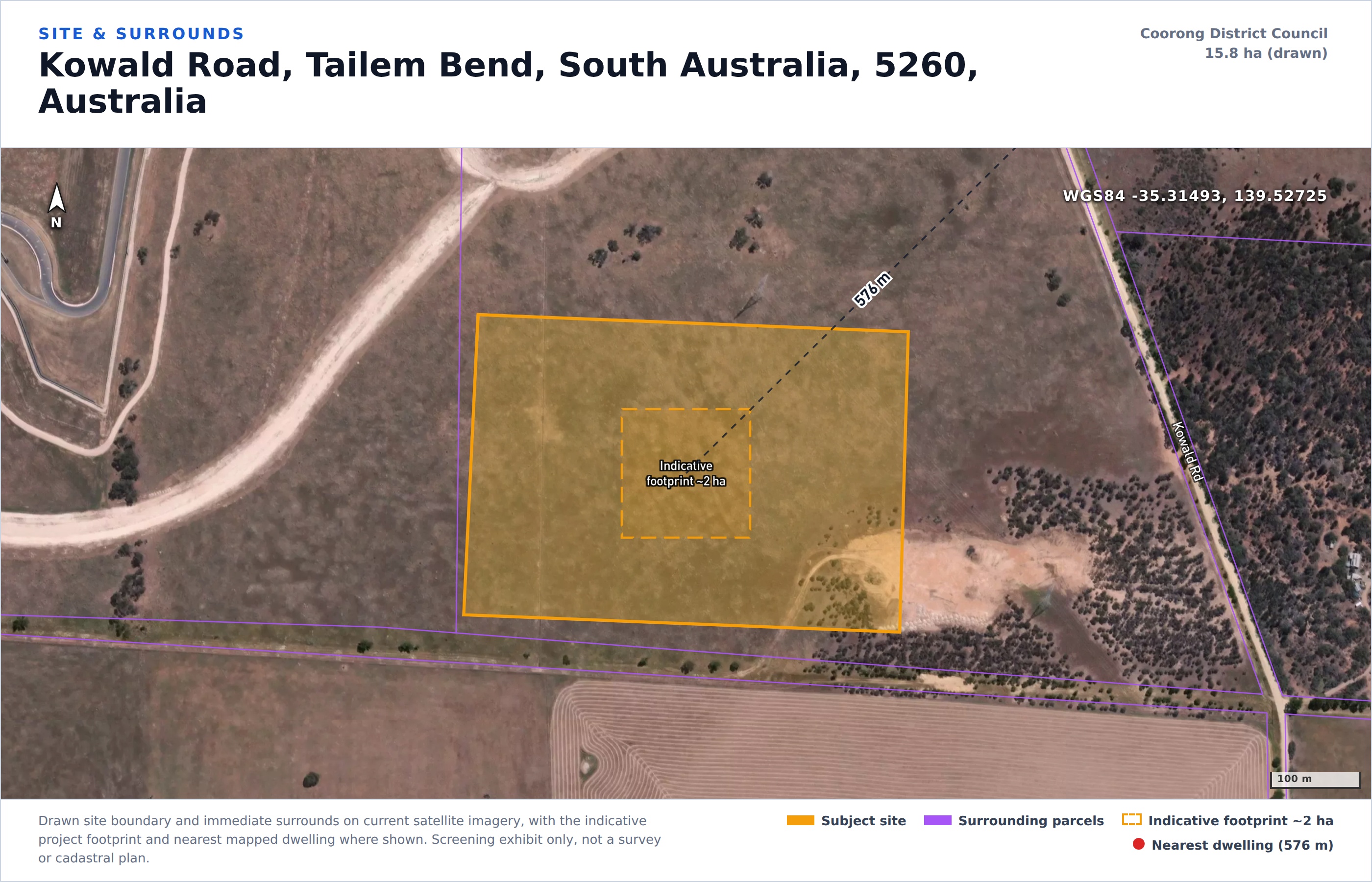
This is the actual constraint table of the sample report: a gas peaker precinct near Tailem Bend, South Australia. Each row carries its own rating and a separate data status, and in the full report each becomes a section with statutory references, sources and a satellite exhibit.
How It Works
No software to adopt, no seats, no onboarding. It slots in front of your existing consultant workflow as an early filter.
An address, coordinates or a boundary file, plus the project type. That is all we need to start.
19 constraints against state and federal spatial data: zoning, overlays, bushfire, flooding, EPBC, heritage, soils, transmission and more. Ratings are weighted for your project type; a gas peaker is not scored like a solar farm.
An overall verdict, per-constraint ratings and data status, satellite exhibits, nearby precedent projects, and the recommended next checks for anything a desktop screen cannot close out.
Honest by Design
Every constraint carries two separate fields: a rating and a data status. Where public data does not exist or cannot be reached, the constraint is marked pending or data-limited instead of being dressed up as clean. On the benchmark sample the screen matched the consultant's finding on every comparable constraint, and disclosed the four it cannot close from a desktop:
Coverage varies by state and the report says so per constraint. Statutory planning overlays are live for SA, VIC, NSW, QLD and WA; EPBC matters, transmission infrastructure and soils are national layers. The deepest calibration is South Australia, where the engine was built against a real consultant assessment. This is a preliminary desktop screen to support early site selection; it is not planning advice, and it does not replace the specialist assessments a development application requires.
Pricing
A consultant desktop constraints study typically runs to five figures and takes weeks. This screen exists so you only commission those for sites that survive the first cut.
Constraints that cannot be assessed from public data are disclosed as pending, never padded. If the screen returns materially less than the sample report shows for your state, we will say so before you pay.
Have a live site?
Address or coordinates plus project type. We reply with scope confirmation and an invoice, then the report within one business day.